Juice drinks, soft drinks and icing carry most of your Red 40
· 5 min read
Written and fact checked by EatMatrix Research Team
Food-additive research team at MAXHUMAN, MB, makers of the EatMatrix scanner
Every claim links to a primary source. Regulatory positions cite EFSA, FDA and WHO/JECFA opinions current at publication.
TL;DR
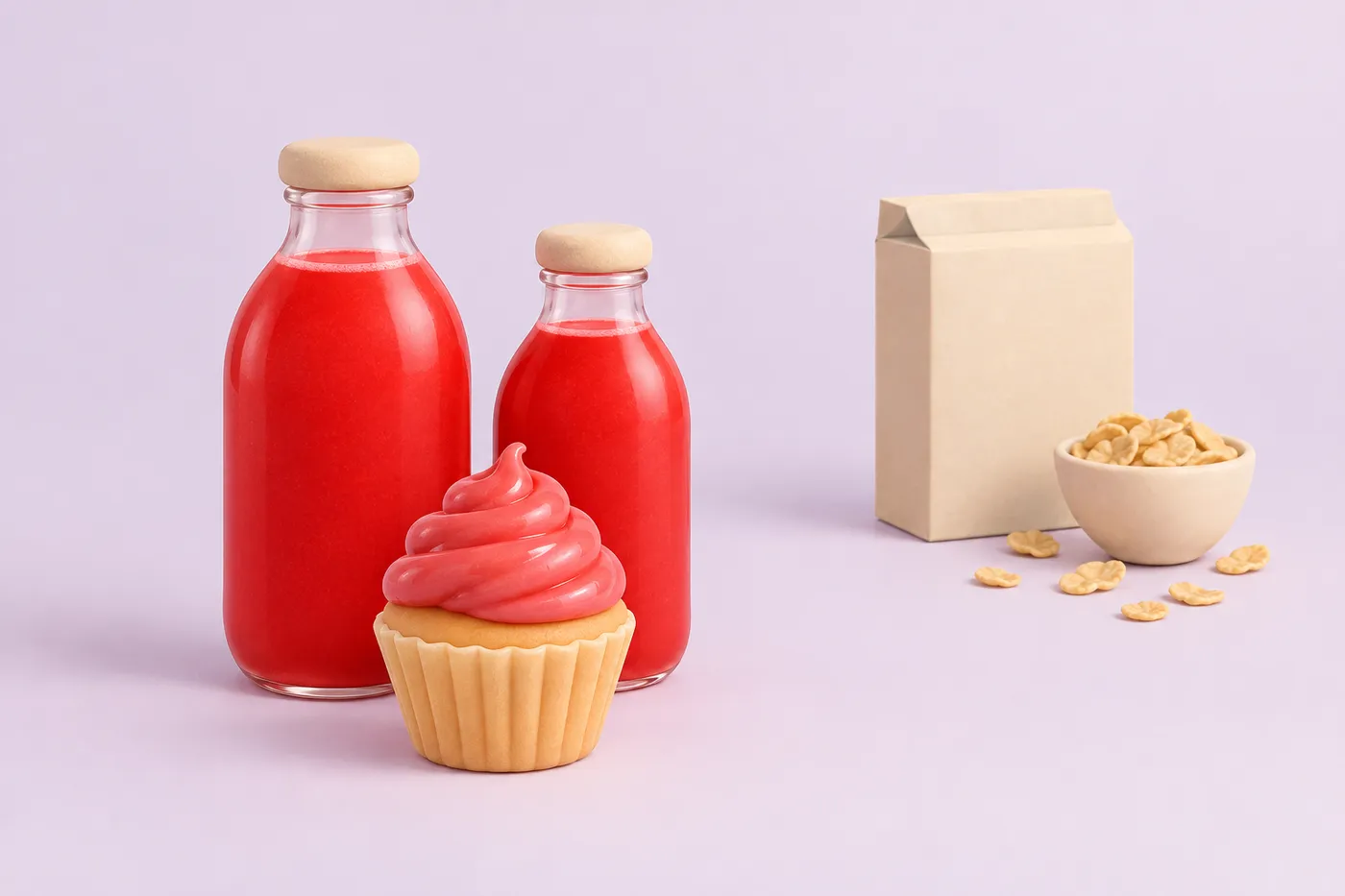
Red 40 is the FDA-approved synthetic color with the highest measured exposure in US dietary surveys, and it concentrates in a short list of categories: juice drinks, soft drinks, icings and ice cream cones, not cereal or baked goods. The one human trial linking dyes to hyperactivity tested a mixture of colors plus a preservative, never Red 40 by itself, so it cannot isolate Red 40's own effect.
Key takeaways
- Juice drinks, soft drinks, icings and ice cream cones are the main sources of Red 40 exposure
- Breakfast cereal was tested for Red 40 but was not a major contributor
- Red 40 shows the highest exposure of any FDA-approved synthetic color in children
- Children's exposure runs higher than adults' because these categories make up more of their diet by weight
- The only major human behavior trial tested a color mixture plus a preservative, not Red 40 alone
Understand the ingredients on your next food label.
Use EatMatrix on your iPhone to scan an ingredient list and explore the ingredient information in the app. Start with a label you already have.
Get EatMatrix for iPhoneOn this page
Red 40 (Allura Red AC, E129) is the single most common synthetic dye in the US food supply, and it is not spread evenly across your grocery list. A 2022 analysis of national dietary survey data found it was the dye with the highest exposure of any FDA-approved synthetic color, and the foods driving that exposure are a short, specific list: juice drinks, soft drinks, icings and ice cream cones.[1] If you are trying to cut down, that list matters more than a blanket “avoid artificial dye” rule, because a cereal box and a fruit punch are not equally guilty.
Where Red 40 concentrates
Red 40 is a synthetic azo dye added for color alone. It carries no nutritional or preservative function and shows up in candy, cereal, flavored beverages, snack cakes and some medicines.
A dataset built from HPLC testing of dye levels in foods commonly eaten by children measured Red 40 across ten categories.[2]
Categories measured for certified food dye content
| Category | Example products |
|---|---|
| Juice drinks | Fruit punches, flavored juice blends |
| Breakfast cereals | Dyed cold cereals |
| Frozen desserts | Flavored ice cream, sherbet |
| Ice cream cones | Pre-made cones and toppings |
| Fruit-flavored soft drinks | Soda, flavored sparkling drinks |
| Frostings and icings | Cake and cupcake decoration |
| Fruit snacks and candy | Gummies, chews, hard candy |
| Decoration chips | Baking decoration sprinkles and chips |
| Water enhancers | Flavor drops and liquid concentrates |
| Flavored drink powder | Powdered mix drinks |
From an HPLC-based survey of foods commonly eaten by children.
That is a wide spread of categories, but not an even one.
The categories that drive exposure: juice drinks, soft drinks, icings and ice cream cones were the major contributors to children’s intake in the 2022 national exposure analysis. Breakfast cereal, despite being tested in the same dataset, was not named among the top contributors.[1]
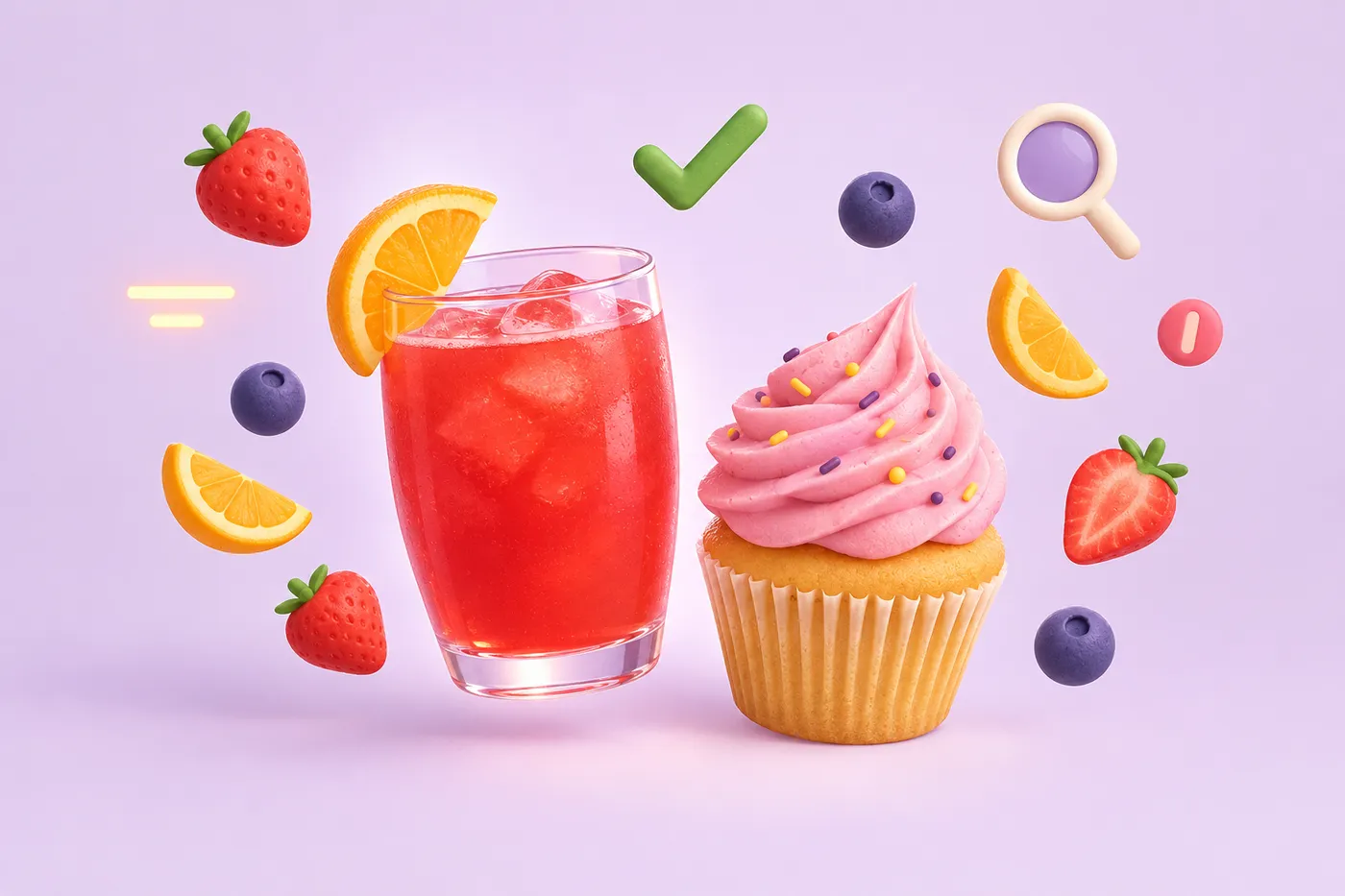
Why drinks and icing lead: both categories use Red 40 at visually saturating doses because the color is the entire point of the product’s appeal. A cereal flake or a snack cake has other visual cues (shape, texture, browning) doing the same job with less dye.
Red 40 also carries an acceptable daily intake and has drawn uneven regulatory treatment worldwide: several countries have imposed bans or stricter controls on its use in food and beverages, even as it remains broadly permitted in the US at current approved levels.[3]
Children carry more of this exposure than adults
The same 2022 analysis found something that did not need a single new chemical fact to be notable: exposure to synthetic food colors overall tends to run higher in children than in adults, and of every dye tested, Red 40 showed the highest exposure.[1]
highest exposure of any FDA-approved synthetic color, measured in children PMID 35955015
- Why: juice drinks, soft drinks, icing and ice cream cones make up a larger share of a child’s diet, by weight, than an adult’s.
- What it is not: this is an exposure fact. It does not amount to a toxicity verdict. Higher exposure means more of the dye is consumed relative to body weight, and it does not mean a known harm threshold has been crossed.
What the human evidence on behavior tested
This is the question that gets most of the search traffic, so it is worth being precise about what was and was not tested.
The strongest human evidence for a link between synthetic dyes and behavior is a 2007 randomized, double-blind, placebo-controlled crossover trial in 153 three-year-olds and 144 eight-to-nine-year-olds.[4] It tested two different mixtures of artificial colors, one of which included Red 40, combined with the preservative sodium benzoate, against a placebo drink. Red 40 alone was never the thing tested.
- One mixture showed a significant adverse effect on a global hyperactivity measure in 3-year-olds (effect size 0.20).
- Both mixtures showed effects in 8/9-year-olds when analysis was restricted to children who drank at least 85 percent of their assigned drink (effect sizes 0.12 and 0.17).[4]
The trial tested a mixture. That means it cannot tell you how much of the effect, if any, came from Red 40 specifically rather than the other dye or the benzoate. For the fuller breakdown of that trial and the mouse-study claims that get attached to it online, the mouse-versus-people breakdown on Red 40 covers that ground already. This piece stays focused on where the dye shows up.
What the evidence does not establish
Being precise here cuts both ways.
- It does not establish that Red 40 alone causes hyperactivity. The only major human trial tested it inside a mixture with another dye and a preservative.
- It does not establish an exact milligram comparison between specific brand-name products. The HPLC survey measured categories. It did not test every product on a shelf, so checking a specific label is still the only way to know that product’s dose.
- It does not establish what, if anything, recent state-level rules have changed about where Red 40 can be sold. That is a regulatory and legislative question outside what the exposure and trial data here settle, and this article is not asserting a specific law or its effective date without a source to check it against.
Bottom line: the exposure data is specific and sourced. The behavior data comes from a trial of a mixture, never a trial of Red 40 by itself. Keep those two facts separate. Conflating them is exactly how “Red 40 is in everything and it’s proven to cause hyperactivity” claims get overstated.
Where this leaves label reading
Checking the ingredient list on drinks, candy, icing and frozen desserts catches most of the everyday Red 40 in a typical US diet, since those are the specific categories the dietary exposure data points to, instead of a vague “processed food” category in general.[1]
Manufacturers already have a working alternative to reach for. Natural colorants such as annatto, beet juice extract and carmine can produce red and orange shades, and some brands sell the same product reformulated with these colorants in markets that apply stricter color-additive rules. A reformulated version existing somewhere is a market and labeling fact. Whether the original Red 40 version is unsafe at its approved US level is a separate question, and the exposure and trial data above are what answers it.
If a product’s color is the main selling point (a drink, a candy, a frosting), assume it is carrying a meaningful dose of whatever dye gives it that color. If the color is incidental, as it is in most cereals and most baked goods, it usually is not. Scanning the label with the EatMatrix app catches this automatically if you would rather not cross-check category data by hand every time you shop.
This article summarises publicly available regulatory assessments and peer-reviewed research about food ingredients. It is general information and is not intended to diagnose, treat, cure, or prevent any disease, and it is not personalised dietary or medical advice. Regulatory positions change; the EatMatrix app reflects the current assessments in our database. If you have an allergy, a medical condition, or are pregnant, talk to a qualified clinician or dietitian before changing what you eat.
References
- Dietary Exposure to United States Food and Drug Administration-Approved Synthetic Food Colors in Children, Pregnant Women, and Women of Childbearing Age Living in the United States.. International journal of environmental research and public health, 2022.
- Dataset of FD&C Certified Food Dyes in Foods Commonly Consumed by Children.. Data in brief, 2023.
- Extraction, Analytical and Advanced Methods for Detection of Allura Red AC (E129) in Food and Beverages Products.. Frontiers in microbiology, 2016.
- Food additives and hyperactive behaviour in 3-year-old and 8/9-year-old children in the community: a randomised, double-blinded, placebo-controlled trial.. Lancet (London, England), 2007.
Frequently asked questions
What foods have Red 40 in them?⌄
Red 40 shows up across candy, cereal, flavored beverages, snack cakes and some medicines, but a 2022 national dietary analysis found juice drinks, soft drinks, icings and ice cream cones were the major contributors to children's exposure, while breakfast cereal was not.
Is Red 40 FDA approved?⌄
A 2022 analysis describes Red 40 as one of the FDA-approved synthetic food colors assessed in US dietary exposure surveys, and it was the dye with the highest measured exposure among them.
Does Red 40 cause hyperactivity in children?⌄
The strongest human trial tested mixtures of artificial colors, one of which included Red 40, combined with the preservative sodium benzoate, against a placebo, not Red 40 in isolation. One mixture showed a significant effect on hyperactivity measures in 3-year-olds, and both mixtures showed effects in 8 and 9 year olds, but the trial cannot tell you how much of that effect came from Red 40 specifically.
Why do children have more Red 40 exposure than adults?⌄
Juice drinks, soft drinks, icing and ice cream cones make up a larger share of a child's diet by body weight than an adult's, which drives higher relative exposure even without the dye being used differently.
Are there alternatives to Red 40?⌄
Natural colorants such as annatto, beet juice extract and carmine can produce similar red and orange shades, and some brands already sell the same products reformulated with these colorants in markets with stricter color-additive rules.
More like this, by email
A weekly email with our new research-backed guides. No spam, unsubscribe any time.