Most Sunflower Oil Isn't the Kind the Old Studies Tested
· 6 min read
Written and fact checked by EatMatrix Research Team
Food-additive research team at MAXHUMAN, MB, makers of the EatMatrix scanner
Every claim links to a primary source. Regulatory positions cite EFSA, FDA and WHO/JECFA opinions current at publication.
TL;DR
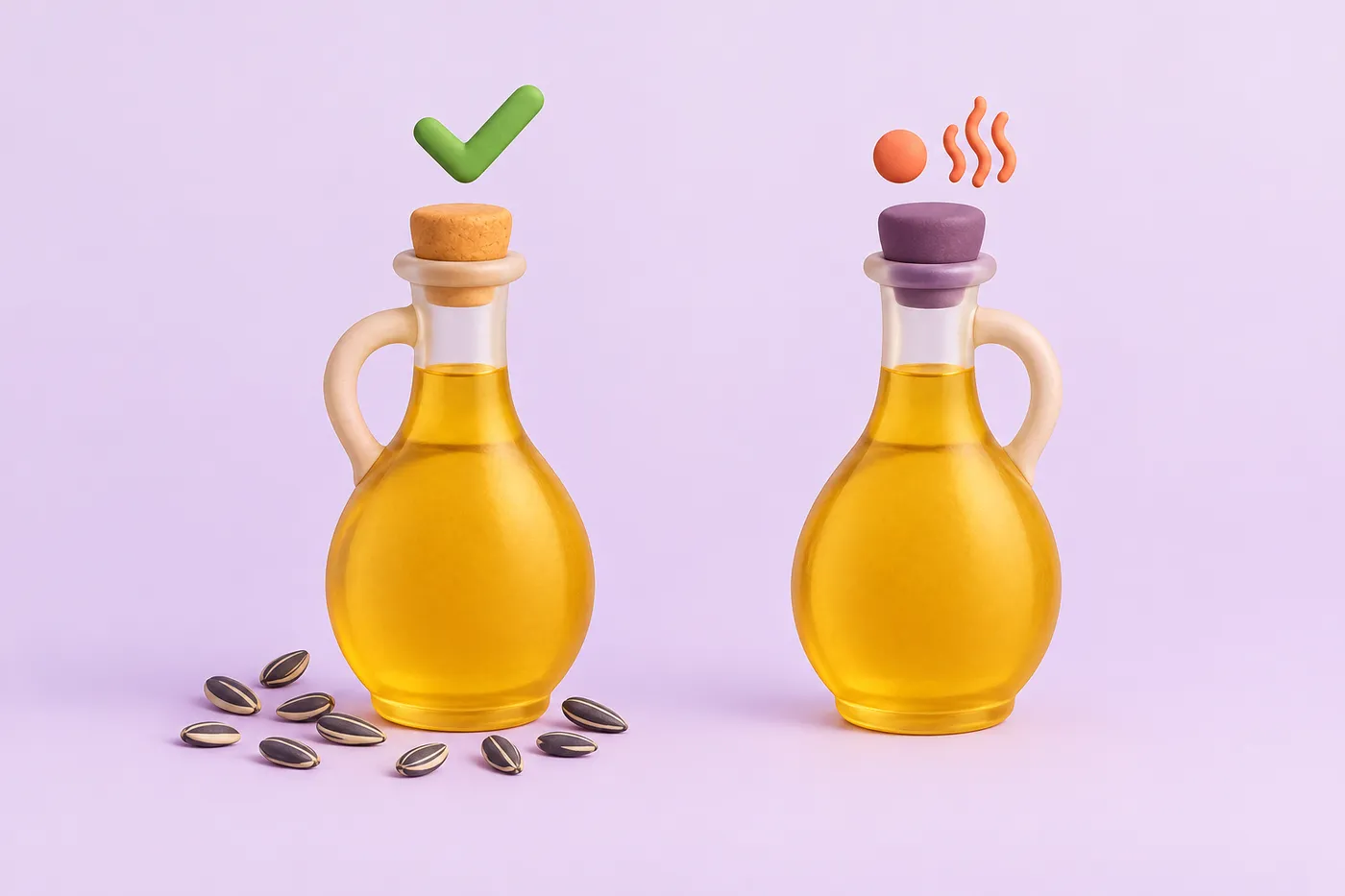
Sunflower oil now comes in two genetically different versions: a conventional oil high in linoleic acid and a high-oleic oil bred to behave more like olive oil. Neither carries a human safety signal that sets it apart from other common vegetable oils at typical intakes, but conventional sunflower oil breaks down more under repeated high-heat frying, and a recent mouse study linking it to gut and liver changes has not been tested in humans.
Key takeaways
- Sunflower oil ranges from about 40 percent oleic acid in conventional oil to 85 percent in high-oleic varieties
- A meta-analysis of 8 randomized trials found replacing saturated fat with linoleic acid lowered coronary heart disease risk by 19 percent
- A 24-week mouse study linked a sunflower-oil-based high-fat diet to gut dysbiosis and liver inflammation, with no human study testing this yet
- Conventional sunflower oil generates more oxidation byproducts than high-oleic oil when heated and reused for frying
- High-oleic sunflower oil was bred to replace trans fats and carries an oleic acid level similar to olive oil
Understand the ingredients on your next food label.
Use EatMatrix on your iPhone to scan an ingredient list and explore the ingredient information in the app. Start with a label you already have.
Get EatMatrix for iPhoneOn this page
- Two sunflower oils, one plant
- What the randomized trials on linoleic acid found
- The mouse study behind the Reddit post, and its limits
- Refining trims the vitamin E, it doesn’t remove it
- The real risk lives in the fryer
- High oleic sunflower oil, measured against olive oil
- What this means for the bottle in your kitchen
- References
Sunflower oil is not one oil anymore. Breeding split it into two chemically different products decades ago: a conventional oil dominated by linoleic acid, and a high-oleic oil bred to behave more like olive oil. Neither version has a human safety signal that sets it apart from the other seed oils on your shelf, but they do not belong in the same sentence when the question is heat, and a label that just says “sunflower oil” does not tell you which one is in the bottle.
Two sunflower oils, one plant
A lipidomic analysis of three market sunflower oils found oleic acid content running from about 40 percent in a conventional oil up to 85 percent in a variety bred specifically for it, with a mid-range oil at 60 percent in between.[1]
Oleic acid content across sunflower oil types
Three commercial sunflower oils analyzed by lipidomic profiling.
That spread matters because the two ends of it behave differently once heat is involved, which is where most of the real caveats in this article live. At typical dietary intakes, nothing here points to either version being dangerous. What changes is which evidence base applies to the bottle you bought.
What the randomized trials on linoleic acid found
Sunflower oil’s main fat, in its conventional form, is linoleic acid, the same omega-6 fat that drives most of the heart disease research on seed oils generally.
- A meta-analysis of eight randomized controlled trials in 13,614 participants found that replacing saturated fat with linoleic-acid-rich polyunsaturated fat lowered coronary heart disease risk by 19 percent.[2]
- A pooled analysis of 30 prospective cohort studies in 68,659 adults found higher circulating and tissue linoleic acid levels associated with lower risk of total cardiovascular disease and cardiovascular mortality.[3]
These two study types answer different questions. The randomized trials assigned people to a diet and tracked what happened, which supports a causal read: swap the fat, change the risk. The cohort studies only tracked what people already ate against what later happened to them, which shows an association rather than proving the fat itself did the work. Both point the same direction, but only one of them can say why.
Bottom line on the heart question: the strongest human evidence available favors linoleic acid over saturated fat for coronary heart disease risk, and it comes from randomized trials, not just dietary patterns people chose on their own.
The mouse study behind the Reddit post, and its limits
A 2026 study is the likely source of the recent online alarm over sunflower oil. Researchers fed mice a sucrose-free, sunflower-oil-based high-fat diet for 24 weeks and compared it to a fish-oil-based high-fat diet. The sunflower oil group developed a distinct gut bacterial profile, elevated fasting glucose, and steatohepatitis-like liver changes, including immune cell infiltration and fat buildup in liver tissue.[4]
That is a real finding, and it is worth taking seriously on its own terms. It is also, specifically, a high-fat feeding study in mice rather than a human trial, and no published human study has isolated sunflower oil itself as a cause of fatty liver disease or gut dysbiosis in people.
The gut dysbiosis and steatohepatitis finding comes from a 24-week mouse diet. No human study has tested whether sunflower oil itself, rather than total fat or calorie intake, drives liver disease in people.
What the human research does show is a different story altogether. A systematic review and meta-analysis of 60 studies in over 100,000 people found total caloric intake was higher in people with nonalcoholic fatty liver disease than in healthy controls, while the proportion of fat, protein and carbohydrate in the diet did not significantly differ between groups.[5] In humans, fatty liver disease tracks with how much a person eats far more consistently than with which fat sits in that diet. That is a genuinely different mechanism than the one the mouse study raises, and it is the one with human data behind it.
Refining trims the vitamin E, it doesn’t remove it
Crude sunflower oil carries natural antioxidant compounds, including tocopherols (vitamin E), carotenoids, phytosterols and squalene. An industrial refining study that tracked sunflower oil through six processing steps, including bleaching and deodorizing, found tocopherol losses of about 8.5 percent overall, with much larger losses in carotenoids (98.6 percent), phytosterols (19.5 percent) and squalene (45.0 percent).[6]
Refining is what makes the oil shelf stable and neutral tasting. It is a real trade-off, just a smaller one for vitamin E specifically than for the compounds that give crude oil its color and aroma.
The real risk lives in the fryer
19% lower coronary heart disease risk from eight RCTs replacing saturated fat with linoleic acid PMID 20351774
Heat is where the two sunflower oils genuinely diverge in practice.
- An NMR analysis comparing sunflower oils with different fatty acid profiles found the oil higher in polyunsaturated fat significantly more prone to peroxidation at standard frying temperature, generating more aldehyde oxidation byproducts than the oil higher in monounsaturated fat.[7]
- In simulated repeated deep frying of potato chips, aldehyde content in the fried food increased with each additional frying episode when a polyunsaturated-fat-rich sunflower oil was the frying medium, while a monounsaturated-fat-rich oil generated substantially less of this buildup under the same conditions.[8]
That second point matters for anyone who reuses frying oil at home: the oil type is not a footnote here, it changes the result. The buildup comes from reusing conventional sunflower oil across repeated high-heat fryings, well beyond what a single ordinary meal cooked in it would produce.
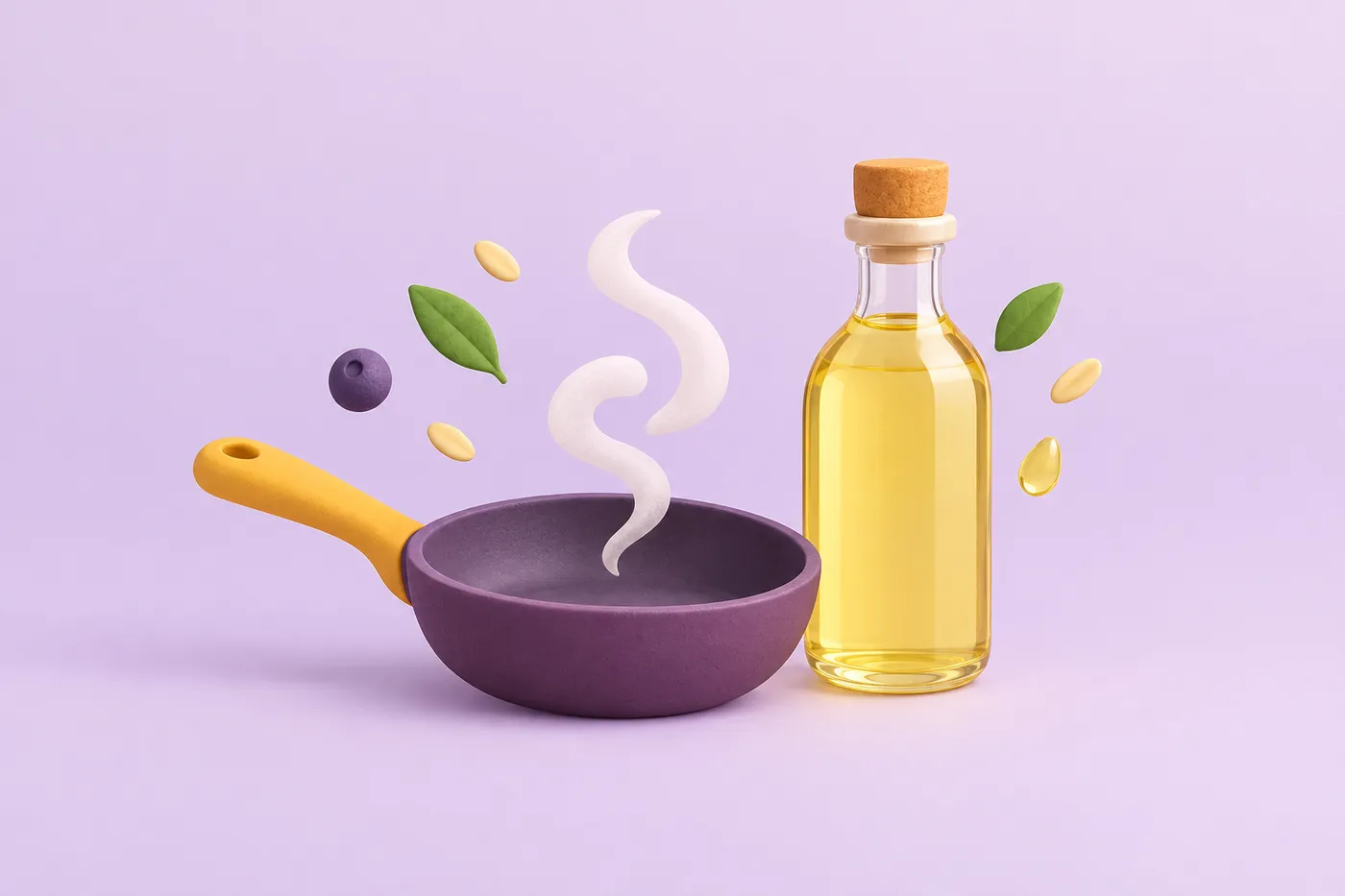
This is also the practical reason high-oleic sunflower oil exists at commercial scale. Concerns over trans fats drove a decline in the use of partially hydrogenated oils, which prompted genetic development of high-oleic sunflower and canola varieties, marketed under names like Omega-9, bred to replicate the functional stability those hydrogenated oils provided.[9] Food manufacturers needed something that would not break down the way polyunsaturated oils do under industrial fryer conditions, and breeding solved it at the seed level instead of the refinery.
High oleic sunflower oil, measured against olive oil
Canola oil went through its own breeding story to cut a single fatty acid, erucic acid, out of rapeseed. High-oleic sunflower oil is a comparable case: breeding for one fatty acid, oleic acid, to change how the oil behaves.
A randomized crossover trial in 24 hypertensive patients found that olive oil and high-oleic sunflower oil diets provided a similar concentration of monounsaturated oleic acid, even though the two oils affected blood lipid particle composition differently.[10] That is a direct test, in people, of the resemblance the marketing implies: on the fat that matters most for the comparison, the two oils are genuinely close.
Conventional sunflower oil, still dominated by linoleic acid, sits in a different camp with the other polyunsaturated-fat-heavy seed oils covered in EatMatrix’s look at the seed oil heart disease claim. Once the two sunflower oil types are considered separately, neither carries a human safety signal that sets it apart from the other vegetable oils already on a typical shelf.
What this means for the bottle in your kitchen
- Check the label for “high oleic.” That wording marks the more heat-stable version, better suited to high-temperature cooking like frying.
- Keep plain “sunflower oil” for lower-heat use. Dressings, light sauteing and baking do not push it into the oxidation range that repeated frying does.
- Do not reuse frying oil indefinitely. Oil that has darkened, foams, or smells rancid after repeated frying has accumulated the oxidation byproducts the research above describes, regardless of which oil started in the fryer.
- Treat the mouse liver study as a lead worth watching, rather than a verdict. It is a real finding that deserves human follow-up research. It is too early to rewrite a diet around one 24-week rodent trial.
None of this makes sunflower oil, in either form, a special case among cooking oils. The conventional version carries the same linoleic acid profile and the same heat sensitivity as other polyunsaturated seed oils. The high-oleic version was bred specifically to avoid that weakness, and the trial evidence backs that up on the fat that was changed. The label on the bottle tells you which oil you are holding far more reliably than the plant it came from.
Scan an ingredient list with EatMatrix to check what else is in the product next to the oil.
This article summarises publicly available regulatory assessments and peer-reviewed research about food ingredients. It is general information and is not intended to diagnose, treat, cure, or prevent any disease, and it is not personalised dietary or medical advice. Regulatory positions change; the EatMatrix app reflects the current assessments in our database. If you have an allergy, a medical condition, or are pregnant, talk to a qualified clinician or dietitian before changing what you eat.
References
- Macrolipidomic Profiling of Vegetable Oils: The Analysis of Sunflower Oils with Different Oleic Acid Content.. Methods in molecular biology (Clifton, N.J.), 2022.
- Effects on coronary heart disease of increasing polyunsaturated fat in place of saturated fat: a systematic review and meta-analysis of randomized controlled trials.. PLoS medicine, 2010.
- Biomarkers of Dietary Omega-6 Fatty Acids and Incident Cardiovascular Disease and Mortality.. Circulation, 2019.
- Gut dysbiosis induced by sunflower oil-based sucrose-free high-fat diet leads to steatohepatitis.. Frontiers in nutrition, 2026.
- Systematic Review and Meta-analysis: The Role of Diet in the Development of Nonalcoholic Fatty Liver Disease.. Clinical gastroenterology and hepatology : the official clinical practice journal of the American Gastroenterological Association, 2023.
- Loss in the Intrinsic Quality and the Antioxidant Activity of Sunflower (Helianthus annuus L.) Oil during an Industrial Refining Process.. Molecules (Basel, Switzerland), 2022.
- Assessing the effects of thermo-oxidation and naturally-occurring trace metal ions on the peroxidative susceptibilities of unrefined and refined sunflower oils: An 1H NMR-coupled chemometrics study.. Food research international (Ottawa, Ont.), 2025.
- Toxic aldehyde generation in and food uptake from culinary oils during frying practices: peroxidative resistance of a monounsaturate-rich algae oil.. Scientific reports, 2019.
- The role of genomics and biotechnology in achieving global food security for high-oleic vegetable oil.. Journal of oleo science, 2012.
- Incorporation of dietary triacylglycerols from olive oil and high-oleic sunflower oil into VLDL triacylglycerols of hypertensive patients.. European journal of clinical nutrition, 1999.
Frequently asked questions
Is sunflower oil bad for you?⌄
At typical dietary intakes, sunflower oil does not carry a human safety signal that sets it apart from other common vegetable oils once conventional and high-oleic versions are considered separately. The real caveat is heat stability during repeated frying, not a general toxicity.
What is high oleic sunflower oil?⌄
It is a version of sunflower oil bred to run about 85 percent oleic acid, closer in fat profile to olive oil than conventional sunflower oil. Food manufacturers developed it to replace partially hydrogenated oils after trans fat concerns grew.
Does sunflower oil cause fatty liver disease?⌄
A 24-week mouse study found a sunflower-oil-based high-fat diet produced gut dysbiosis and steatohepatitis-like liver changes, but this has not been tested in humans. Human research links fatty liver disease most consistently with total calorie intake rather than the specific type of fat eaten.
Is sunflower oil good for frying?⌄
It depends on the version. High-oleic sunflower oil holds up better under repeated high-heat frying, while conventional sunflower oil generates more oxidation byproducts, including aldehydes, when reused in a fryer.
Is high oleic sunflower oil the same as olive oil?⌄
Not the same oil, but a randomized trial found olive oil and high-oleic sunflower oil diets provided a similar concentration of monounsaturated oleic acid, even though the two oils affected blood lipid composition differently.
More like this, by email
A weekly email with our new research-backed guides. No spam, unsubscribe any time.


