What Is Canola Oil? The Rapeseed Behind the Bottle, Explained
· 7 min read
Written and fact checked by EatMatrix Research Team
Food-additive research team at MAXHUMAN, MB, makers of the EatMatrix scanner
Every claim links to a primary source. Regulatory positions cite EFSA, FDA and WHO/JECFA opinions current at publication.
TL;DR
Canola oil comes from rapeseed bred specifically to remove erucic acid, a fatty acid tied to cardiotoxic effects in animal studies. It is mostly monounsaturated fat with a favorable omega-6 to omega-3 ratio near 2 to 1, and randomized trials back real cholesterol and triglyceride effects, while the Alzheimer's scare traces to a single unrelated mouse study.
Key takeaways
- Canola is rapeseed bred to remove erucic acid, a fat tied to cardiotoxicity in rats
- Its fat is about 18 to 19 percent omega-6 and 8 to 10 percent omega-3, roughly a 2 to 1 ratio
- Refining strips about 85 percent of its natural color and flavor compound, plus some vitamin E
- A 6 month randomized trial found a high ALA rapeseed oil diet lowered triglycerides
- A 14 year cohort linked higher canola oil intake to 24 percent lower total mortality
Understand the ingredients on your next food label.
Use EatMatrix on your iPhone to scan an ingredient list and explore the ingredient information in the app. Start with a label you already have.
Get EatMatrix for iPhoneOn this page
Canola oil is not an additive hiding inside your groceries. It’s a plant oil with a stranger origin than almost anything else in the pantry: a rapeseed cultivar bred specifically because the fatty acid in the original oil worried food safety researchers enough that breeders removed it entirely. The online argument over whether canola oil is “bad for you” usually skips right past what the oil is, where it comes from, and what’s left in the bottle once the refinery is done with it. That’s the more useful question, and it’s the one this piece answers.
If you came here for the Alzheimer’s mouse study fight, EatMatrix already broke that one down, and it isn’t repeated here.
Rapeseed bred to solve one problem
Rapeseed has been grown for its oil for centuries, mostly for industrial uses like lamp fuel and lubricants. The food-grade version sitting on your shelf exists because of a specific breeding fix.
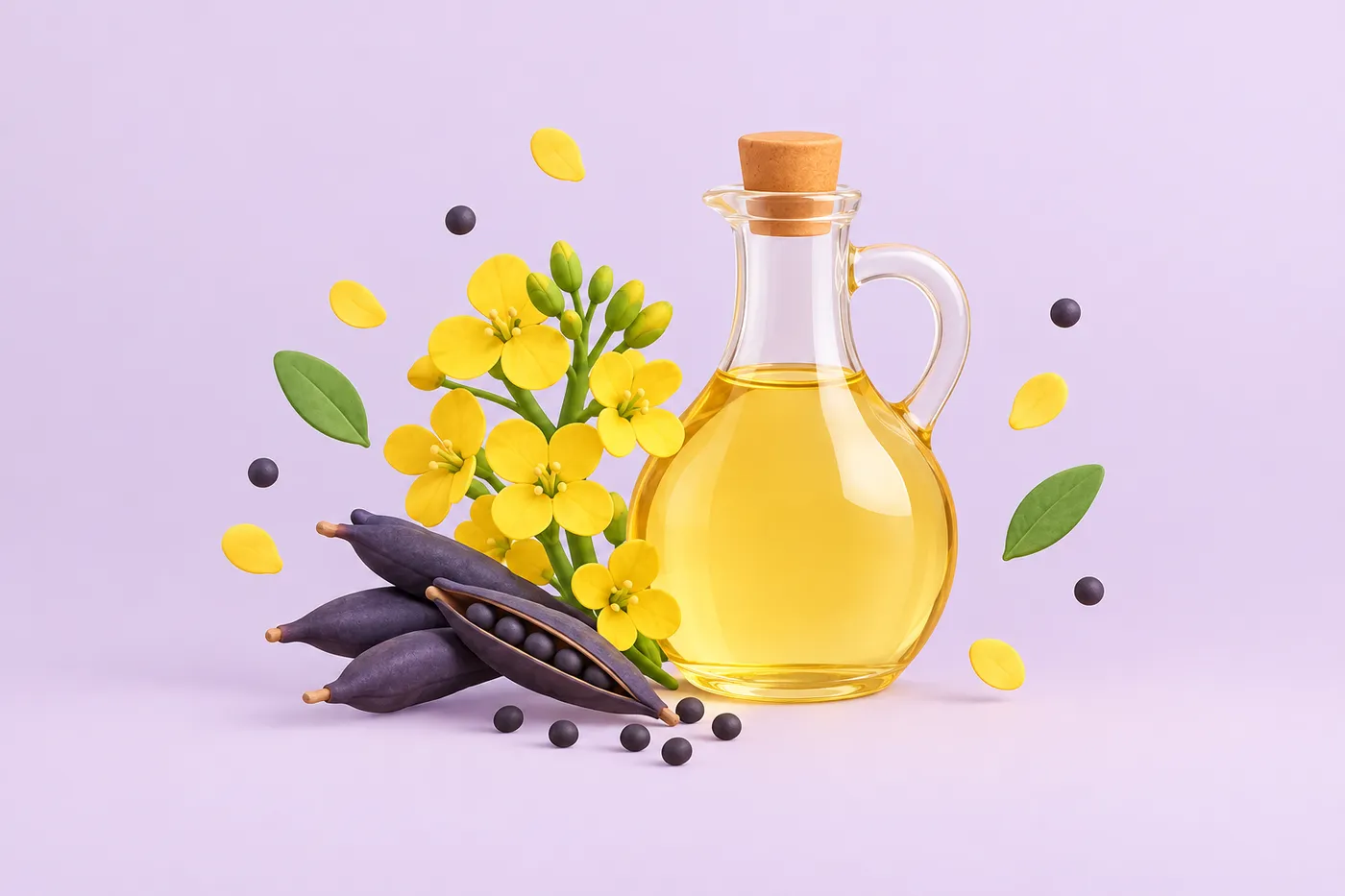
The double low trait. Canola and modern rapeseed oil both come from what the European Food Safety Authority calls “double low (00) cultivars,” rapeseed varieties selected to carry a low erucic acid content and reduced glucosinolates compared with the older varieties they replaced.[1]
Why bother breeding that out? Erucic acid, the fatty acid that defined old-style rapeseed oil, has an uncomfortable history. Early reviews report that high dietary erucic acid intake showed cardiotoxic effects, including toxicity to rats, a concern tied to the poisoning seen in Toxic Oil Syndrome.[2] Those findings are part of why plant breeders moved toward the low-erucic-acid cultivars described above.[1]
The detail most people miss: canola oil exists because plant breeders needed an edible alternative to a rapeseed oil that animal studies had flagged as a heart tissue problem. No marketing team invented a healthier sounding name to sell it.
On a food label, that history mostly disappears. The same double-low oil can legally show up as canola oil, rapeseed oil, or buried inside a generic “vegetable oil” blend on an ingredient panel. Scan any of the three on EatMatrix and you’re reading the same regulated, low-erucic-acid product.
The fat profile that sets canola apart
Strip away the safety debate and canola oil is mostly defined by its fat profile, a part of the story that’s measured rather than argued over.
What’s in the bottle. Canola oil is mostly monounsaturated oleic acid, the same fat that dominates olive oil, with linoleic acid (omega-6) making up about 18 to 19 percent and alpha-linolenic acid (omega-3) about 8 to 10 percent of its fat content, according to multi-year Canadian harvest sampling data.[3]
That composition isn’t fixed in stone. It shifts with growing conditions.
Canola oil's changing fat profile
| Fatty acid | Early 2010s average | 2022 average |
|---|---|---|
| Linoleic acid (omega-6) | 19.21% | 18.06% |
| Alpha-linolenic acid (omega-3) | 9.93% | 8.16% |
Canadian Harvest Sample Program averages, 2010 to 2022.
Both fatty acids ticked down over that decade as the climate warmed during the growing season, with oleic acid rising to take up the slack.[3]
Run the arithmetic on those two numbers and canola oil’s ratio of omega-6 to omega-3 fat works out to roughly 2 to 1, lower than many other common vegetable oils.[3]
What the refinery takes back out. The bleaching and deodorizing steps that turn raw, strong-tasting canola oil into the neutral liquid on the shelf strip a lot out of it in the process. A study tracking commercially refined canola oil found canolol, a phenolic compound tied to its natural color and flavor, fell by 84.9 percent during bleaching, and tocopherols, the oil’s vitamin E, dropped by 37.6 percent during deodorization.[4]
85% of canola oil's natural color and flavor compound (canolol) lost during bleaching PMID 25222858
This isn’t unique to canola. Extra virgin olive oil skips industrial refining almost entirely by definition, which is the real reason it keeps a stronger flavor and more of its natural compounds than a refined seed oil does. The tradeoff is shelf life and price. Safety doesn’t enter into it.
What the strongest human trials and cohorts show
The health argument around canola oil rests on a mix of randomized trials and large cohorts, and they don’t answer the same kind of question.
The randomized evidence. A trial in 81 patients with metabolic syndrome, the cluster of risk factors that includes excess abdominal fat and elevated blood pressure, put people on a rapeseed oil diet providing 3.5 grams a day of alpha-linolenic acid. After six months, their triglycerides had dropped significantly. A comparison group on an olive oil diet lower in alpha-linolenic acid saw no such drop.[5]
That’s a real signal, with real limits:
- This and most other canola oil trials run for weeks to a few months rather than years.
- They track blood lipid markers like triglycerides rather than heart attacks, strokes, or death.
- A risk-marker change is a reasonable basis for a recommendation. Proof of fewer cardiac events is a different thing entirely.
The cohort evidence, and why it can’t finish the argument. Large cohort studies that link higher vegetable oil intake to health outcomes are observational. They track what people already choose to eat rather than a diet assigned at random, so they can show an association without proving the oil caused the result.
One of the larger ones specifically names canola oil. A nationwide Chinese cohort followed 14,305 adults for a median of 14 years and found that people in the highest tertile of canola oil consumption had 24 percent lower total mortality than people who ate none, with swapping lard and other animal cooking oils for plant oils linked to further reductions.[6]
24% lower total mortality, highest tertile of canola oil intake versus none, over a 14 year cohort PMID 32359931
What this does and doesn’t prove: the association holds up in a large, long cohort, but it’s still an association. People who cook with more canola oil may differ from people who don’t in a dozen other ways a food frequency questionnaire can’t fully capture.
What this evidence doesn’t settle
Being honest about the gaps matters as much as the findings.
- Dementia risk is an open question, and not for the reason the internet thinks. No large human cohort or trial has isolated canola oil’s long-term effect on dementia risk. The claim that it causes Alzheimer’s traces only to a single rodent study unrelated to ordinary human intake, which EatMatrix has already broken down in full.
- The lipid trials are too short to prove the thing people care about. Months of triglyceride data can’t show whether that change holds up as fewer heart attacks or strokes over a lifetime.
- The old animal-era safety question already has a clean modern answer. The cardiac effects of erucic acid seen in animal studies have not been confirmed in humans eating ordinary diets.[2]
Where canola sits next to olive oil and palm oil
Canola oil doesn’t exist in isolation on the shelf, and one comparison is conspicuously missing here. A clean, sourced, head-to-head fatty acid breakdown against olive oil didn’t turn up anywhere in this search, so that specific comparison isn’t made in this piece. Flagging the gap beats filling it with an unsourced number.
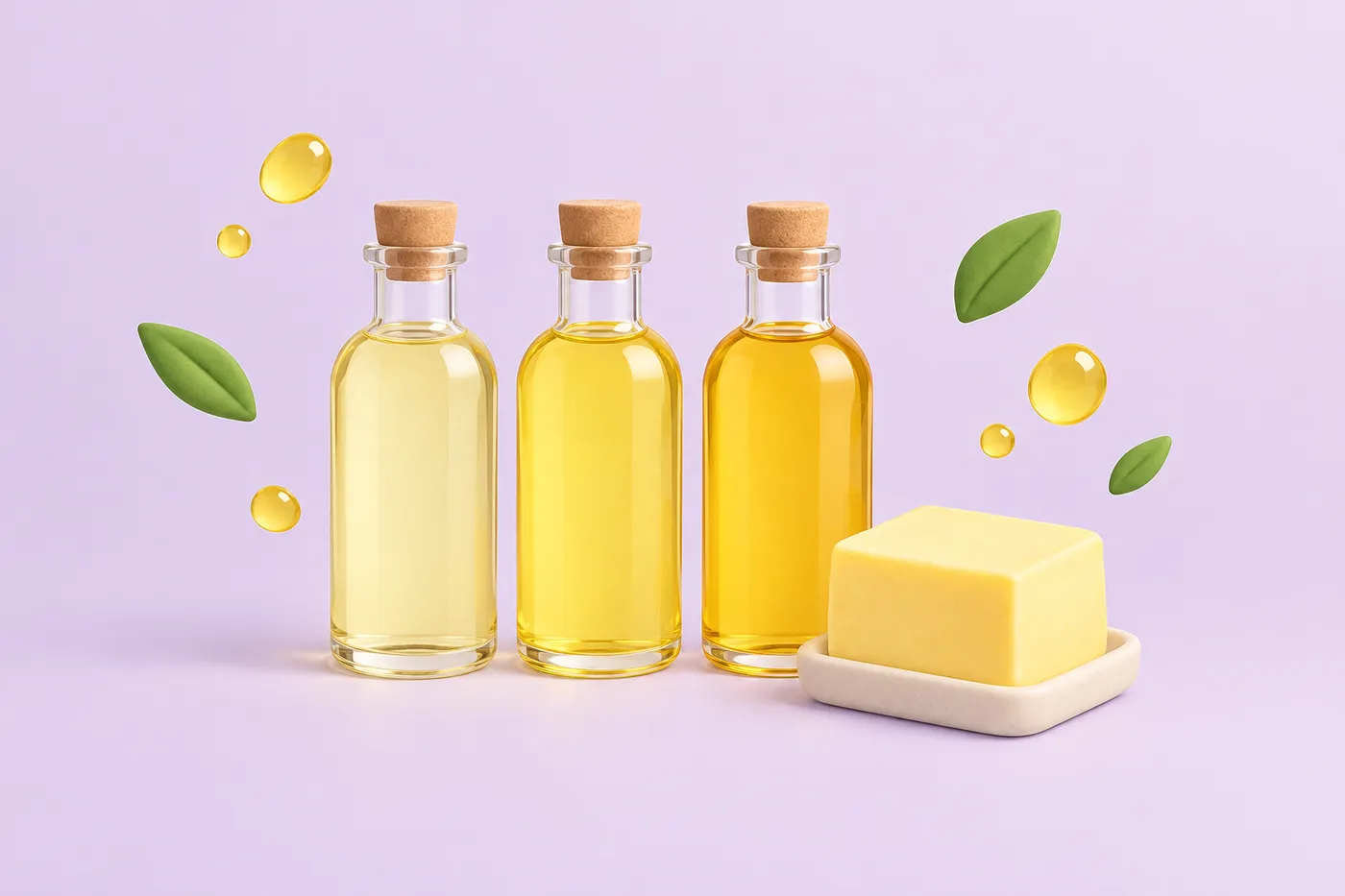
What is backed by trial evidence is the palm oil comparison. A meta-analysis of 51 dietary intervention trials found that substituting palm oil, high in saturated fat, for diets richer in unsaturated fats like canola oil raised total and LDL cholesterol.[7] That’s part of why dietary guidance favors swapping palm oil or butter for unsaturated oils such as canola, rather than the other direction.
None of this makes canola oil a uniquely superior oil. It’s one reasonable, well-studied unsaturated-fat choice among several on the shelf. Olive oil simply has a bigger human trial base behind it, a data advantage, nothing more. It says nothing about canola oil being any less safe.
What this means next time you’re at the shelf
Translate all of that into something useful standing in the oil aisle.
- A bottle labeled canola oil, rapeseed oil, or a vegetable oil blend containing canola is covered by the same low-erucic-acid standard. The name on the label doesn’t signal a different formulation underneath.
- The trial evidence backs one specific piece of advice: swap canola oil in for butter, palm oil, or reused frying oil. Avoiding canola oil itself isn’t what the data supports.
- The open question worth watching is whether the newer high-omega-3 canola varieties produce the same triglyceride benefit at a scale large enough to show up in heart disease outcomes, rather than just blood lipid numbers.
Bottom line: canola oil is a deliberately bred, heavily refined seed oil with a genuinely favorable omega fat ratio and real randomized evidence behind its cholesterol and triglyceride effects. The Alzheimer’s scare and the old erucic acid panic are both settled questions once you read past the headline. What’s open is whether any of this changes hard health outcomes over a lifetime, the thing blood numbers can only hint at.
This article summarises publicly available regulatory assessments and peer-reviewed research about food ingredients. It is general information and is not intended to diagnose, treat, cure, or prevent any disease, and it is not personalised dietary or medical advice. Regulatory positions change; the EatMatrix app reflects the current assessments in our database. If you have an allergy, a medical condition, or are pregnant, talk to a qualified clinician or dietitian before changing what you eat.
References
- Safety of rapeseed powder from Brassica rapa L. and Brassica napus L. as a Novel food pursuant to Regulation (EU) 2015/2283.. EFSA journal. European Food Safety Authority, 2020.
- Erucic Acid-Both Sides of the Story: A Concise Review on Its Beneficial and Toxic Properties.. Molecules (Basel, Switzerland), 2023.
- Longitudinal cohort study of canola composition demonstrates changes in the climate and the food system are decreasing the essential fatty acid content of canola.. The American journal of clinical nutrition, 2025.
- Value-added potential of expeller-pressed canola oil refining: characterization of sinapic acid derivatives and tocopherols from byproducts.. Journal of agricultural and food chemistry, 2014.
- Effects of a rapeseed oil-enriched hypoenergetic diet with a high content of α-linolenic acid on body weight and cardiovascular risk profile in patients with the metabolic syndrome.. The British journal of nutrition, 2012.
- Plant-sourced cooking oil consumption is associated with lower total mortality in a longitudinal nationwide cohort study.. Clinical nutrition (Edinburgh, Scotland), 2020.
- Palm oil and blood lipid-related markers of cardiovascular disease: a systematic review and meta-analysis of dietary intervention trials.. The American journal of clinical nutrition, 2014.
Frequently asked questions
Is canola oil the same as rapeseed oil?⌄
Yes. Canola oil and modern rapeseed oil both come from the same double low breeding, selected for low erucic acid and reduced glucosinolates, so the name on the label does not signal a different formulation.
Does canola oil cause Alzheimer's disease?⌄
No large human cohort or trial has tested canola oil against dementia risk. The claim traces to a single rodent study unrelated to ordinary human intake, which EatMatrix covers in a dedicated article.
Is canola oil healthier than olive oil?⌄
Neither is clearly superior. Canola oil has a favorable omega-6 to omega-3 ratio, while olive oil simply has a larger human trial base behind it, which is a data advantage, not evidence that canola oil is less safe.
Does refining remove nutrients from canola oil?⌄
Yes. Bleaching and deodorizing strip out about 85 percent of its natural canolol color and flavor compound during bleaching, and roughly a third of its vitamin E during deodorization.
Is canola oil bad for you?⌄
The cardiac effects of erucic acid seen in animal studies have not been confirmed in humans eating ordinary diets, and randomized trials show canola and rapeseed oil diets can lower triglycerides and cholesterol markers compared with some other fats.
More like this, by email
A weekly email with our new research-backed guides. No spam, unsubscribe any time.