Is Casein Bad for You? The A1 Debate and a Debunked Cancer Claim
· 6 min read
Written and fact checked by EatMatrix Research Team
Food-additive research team at MAXHUMAN, MB, makers of the EatMatrix scanner
Every claim links to a primary source. Regulatory positions cite EFSA, FDA and WHO/JECFA opinions current at publication.
TL;DR
Casein is safe for most people who eat dairy. The two real questions are whether the A1 beta-casein variant in conventional milk causes more digestive discomfort than the A2 variant, which one small human trial supports, and whether casein causes cancer, a claim that traces to rat experiments and has no human evidence behind it.
Key takeaways
- Casein digests slowly and whey digests quickly, which is why trials pair them for different timing goals
- One randomized trial found A1 and A2 mixed milk caused more digestive discomfort than A2-only milk in intolerant adults
- The casein cancer claim comes from rat experiments fed a carcinogen, not from any human diet study
- Pre-sleep casein trials use 20 to 45 grams of isolated protein powder, far more than a typical dairy serving
- A diagnosed milk protein allergy is an immune reaction, different from ordinary digestive sensitivity to A1 beta-casein
Understand the ingredients on your next food label.
Use EatMatrix on your iPhone to scan an ingredient list and explore the ingredient information in the app. Start with a label you already have.
Get EatMatrix for iPhoneOn this page
- Casein digests slowly, and that is the whole point
- The A1 and A2 beta-casein split
- Where the casein cancer claim comes from
- The doses in these trials, and what a dairy serving supplies
- Milk allergy versus casein sensitivity
- Where casein fits next to whey and plant protein
- What would change this picture
- References
Casein, the main protein in milk and cheese, is safe for the overwhelming majority of people who eat dairy. The two real questions hiding inside “is casein bad for you” are narrower than the search suggests: whether the A1 genetic variant found in most conventional milk causes more digestive discomfort than the A2 variant, and whether a viral claim about casein and cancer has any human evidence behind it. It does not, and the digestive question has exactly one human trial to its name.
Casein digests slowly, and that is the whole point
Casein and whey are both milk proteins, but they behave nothing alike once swallowed. A classic human feeding trial gave healthy adults a single meal of either casein or whey, each labeled so researchers could track amino acids in the blood afterward.
Whey produced a sharp, short spike in plasma amino acids. Casein produced something slower: a prolonged, moderate rise that the researchers attributed to the protein clotting in the stomach and slowing gastric emptying[1].
That slow release changed what the body did with the protein. Casein ingestion inhibited whole-body protein breakdown by 34 percent, and net protein balance over the following seven hours came out more positive with casein than with whey, even though both meals contained identical amounts of protein[1].
34% reduction in whole-body protein breakdown after a casein meal, versus a whey meal of the same size PMID 9405716
Why this matters for sleep and training: a systematic review of nine trials found that 20 to 40 grams of casein eaten about 30 minutes before sleep stimulates whole-body protein synthesis through the night, and that keeping this up alongside resistance training adds to muscle size and strength gains in young men[2]. That review did not find the same strength benefit in elderly men, even though the overnight synthesis response still occurred in that group.
The A1 and A2 beta-casein split
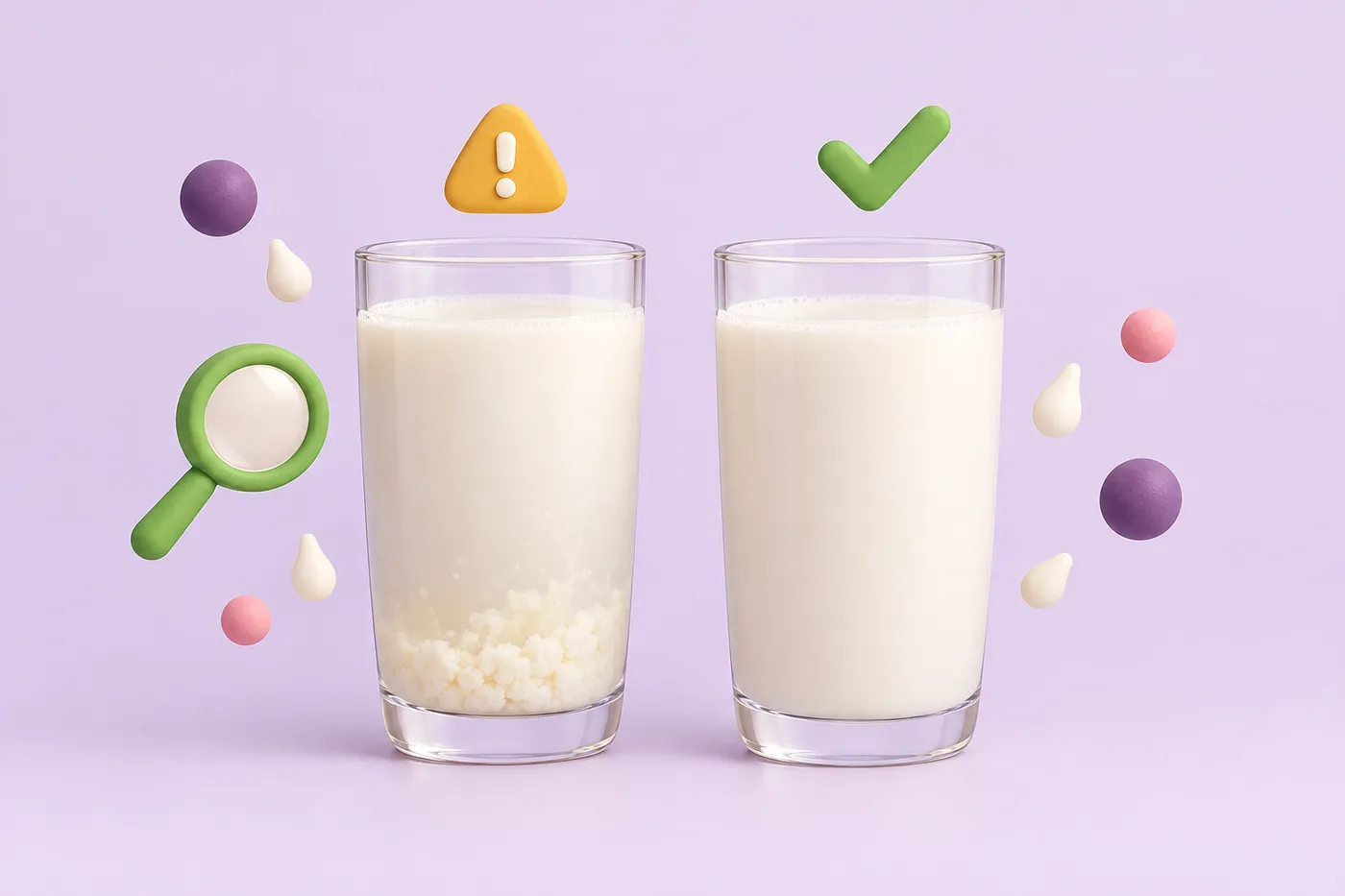
Most conventional cow’s milk is a mix of two genetic variants of beta-casein, called A1 and A2. During digestion, the A1 variant releases the opioid-like peptide beta-casomorphin-7[3]. Digestion of A1 beta-casein yielding that peptide, which has been linked to adverse gastrointestinal effects, is the whole basis for comparing it against milk made only from the A2 variant[4].
Beta-casomorphin-7 behaves a little like codeine does in the body. Codeine itself does almost nothing until the liver converts a fraction of it into morphine, which then binds opioid receptors; beta-casomorphin-7 is a different molecule entirely, but it binds some of the same receptor family in the gut, which is the proposed mechanism for the digestive symptoms some people report.
Only one randomized trial has tested the A1/A2 question directly against the symptom people report. In a double-blind, 2x2 crossover trial, 45 Han Chinese adults who already reported milk intolerance drank milk containing both beta-casein variants during one period and milk containing only the A2 variant during another. Milk with both variants caused significantly greater digestive discomfort than the A2-only milk[4].
The honest limit here: that trial measured symptoms. It did not, and could not, establish that A1 beta-casein causes a diagnosable condition. A regulatory body’s specific verdict on whether beta-casomorphin-7 causes long-term disease would be the natural next citation here, but it was not independently verifiable through the sources available for this article, so it is left out rather than asserted from memory.
What the Chinese crossover trial does establish, reliably: if you already notice bloating or discomfort after regular milk, which variant you are drinking is a real variable worth testing for yourself.
Where the casein cancer claim comes from
A version of “casein causes cancer” circulates widely online, usually without the context that would let anyone check it. The claim traces back to a line of rat experiments rather than any study of human diets.
In one of those experiments, Fischer 344 rats were exposed to the carcinogen aflatoxin B1 and then fed either a 6 percent casein diet or a 22 percent casein diet for a year. Hepatic tumors developed in 27 percent of the high-casein group, compared with 6 percent of the low-casein group[5].
27% of rats on a 22% casein diet developed liver tumors after aflatoxin exposure, versus 6% on a 6% casein diet PMID 14502844
That is a real, striking result. It is also an experiment in rodents, deliberately dosed with a potent liver carcinogen, comparing two extreme protein levels that bracket far outside normal human dietary range.
Bottom line on the cancer claim: no published human cohort study has found that ordinary dietary casein intake, as distinct from total dairy or total protein intake, independently causes cancer. The rat result is real. It does not transfer to a glass of milk.
The doses in these trials, and what a dairy serving supplies
Research dosing and dietary intake are not the same scale, and conflating them is where most of the online alarm comes from.
Casein amounts: research dose versus dinner
| Context | Typical amount | What it is |
|---|---|---|
| Pre-sleep supplementation trials | 20 to 45 grams of isolated casein protein, taken shortly before sleep | A research protocol |
| A cup of milk or an ounce of cheese | A fraction of the trial dose | Ordinary dietary intake |
Pre-sleep trials use isolated protein powder as a research tool.
Trials studying pre-sleep casein supplementation have used doses in that 20 to 45 gram range as isolated protein powder, a research protocol rather than public guidance[2]. A normal dairy serving does not come close to that concentration, which is the main reason the cancer-claim rat diets (6 and 22 percent of total calories from casein) bear so little resemblance to how most people eat.
Milk allergy versus casein sensitivity
Two different things get lumped together under “casein is bad for me,” and they call for completely different responses.
- A diagnosed cow’s milk protein allergy is an immune reaction to the casein and whey proteins in milk. It is a different mechanism from lactose intolerance, which is a reaction to milk sugar and involves no immune response at all[6].
- Self-reported digestive discomfort after ordinary milk, the kind the A1/A2 trial measured, is not the same thing as a diagnosed allergy and does not require the same avoidance.
People with a diagnosed milk protein allergy should avoid casein protein supplements entirely. Isolated casein and ingredients like sodium or calcium caseinate are concentrated forms of the same allergenic protein, and they turn up in processed foods that never mention dairy on the front of the package. Checking the ingredient panel with a scanner like EatMatrix catches a caseinate line that a “non-dairy” claim on the box does not.
If a milk allergy, rather than general sensitivity, is the actual concern, the detailed breakdown of where casein hides in processed food and how allergy testing works lives in Foods With Casein Go Beyond What a Non-Dairy Label Promises.

Where casein fits next to whey and plant protein
Casein is not vegan, since it comes from milk during lactation, a fact covered in more detail in Casein Isn’t Vegan, but a Microbial Version Already Exists. For anyone avoiding dairy for allergy, intolerance, or diet reasons, plant-based proteins such as soy or pea protein contain no casein and are a direct substitute.
For everyone else, the practical distinction that matters is speed.
- Whey digests fast and produces a quick amino acid spike, the protein equivalent of an espresso shot.
- Casein digests slowly and sustains amino acid availability over hours, closer to a slow drip.
Because of that difference, research on protein timing treats the two proteins differently: whey for a fast rise in amino acids right after exercise, casein for sustaining amino acid availability through the overnight fasting period[2].
What would change this picture
A2-only milk products have become more widely available at retail as research on A1 beta-casein has influenced dairy breeding and marketing decisions, not because a major regulator has endorsed a general health advantage over conventional milk[3].
The honest caveat is that only one published randomized trial has directly tested A1 against A2 milk on digestive symptoms in people who already report intolerance. One well-designed crossover trial is a real result. It is not yet a replicated body of evidence, and a second independent trial, in a different population, is what would move this from “worth trying if you’re already symptomatic” to “settled.”
This article summarises publicly available regulatory assessments and peer-reviewed research about food ingredients. It is general information and is not intended to diagnose, treat, cure, or prevent any disease, and it is not personalised dietary or medical advice. Regulatory positions change; the EatMatrix app reflects the current assessments in our database. If you have an allergy, a medical condition, or are pregnant, talk to a qualified clinician or dietitian before changing what you eat.
References
- Slow and fast dietary proteins differently modulate postprandial protein accretion.. Proceedings of the National Academy of Sciences of the United States of America, 1997.
- Effects of pre-sleep protein consumption on muscle-related outcomes - A systematic review.. Journal of science and medicine in sport, 2021.
- Does a Little Difference Make a Big Difference? Bovine β-Casein A1 and A2 Variants and Human Health-An Update.. International journal of molecular sciences, 2022.
- Effects of milk containing only A2 beta casein versus milk containing both A1 and A2 beta casein proteins on gastrointestinal physiology, symptoms of discomfort, and cognitive behavior of people with self-reported intolerance to traditional cows' milk.. Nutrition journal, 2016.
- Long-term intake of a low-casein diet is associated with higher relative NK cell cytotoxic activity in F344 rats.. Nutrition and cancer, 1994.
- Cow's milk protein allergy: A comprehensive review of epidemiology, pathogenesis, clinical manifestations, diagnostics, and management strategies.. Asia Pacific journal of clinical nutrition, 2025.
Frequently asked questions
Is casein bad for you?⌄
No, not for most people. The two documented issues are digestive discomfort some people report from A1 beta-casein, and a cancer claim that comes from rat experiments rather than human data.
Does casein cause cancer?⌄
No published human cohort study has found that ordinary dietary casein intake causes cancer. The viral claim traces to a rat study where animals exposed to a carcinogen and fed a high-casein diet developed more liver tumors than those fed a low-casein diet, an animal result that does not transfer to human diets.
What is the difference between A1 and A2 casein?⌄
A1 and A2 are genetic variants of beta-casein that differ by a single amino acid. A1 releases a peptide called beta-casomorphin-7 during digestion, and one randomized trial found milk containing both variants caused more digestive discomfort than milk containing only A2.
How much casein protein is used in pre-sleep supplementation studies?⌄
Trials have used 20 to 45 grams of isolated casein protein taken about 30 minutes before sleep, a research protocol rather than a public recommendation. A typical dairy serving supplies far less.
Is casein the same as a milk allergy?⌄
No. A diagnosed cow's milk protein allergy is an immune reaction to casein and whey proteins, while the digestive discomfort linked to A1 beta-casein is a different, non-immune response.
More like this, by email
A weekly email with our new research-backed guides. No spam, unsubscribe any time.