Vegetable Oil Is Fine Until the Pan Gets Too Hot
· 5 min read
Written and fact checked by EatMatrix Research Team
Food-additive research team at MAXHUMAN, MB, makers of the EatMatrix scanner
Every claim links to a primary source. Regulatory positions cite EFSA, FDA and WHO/JECFA opinions current at publication.
TL;DR
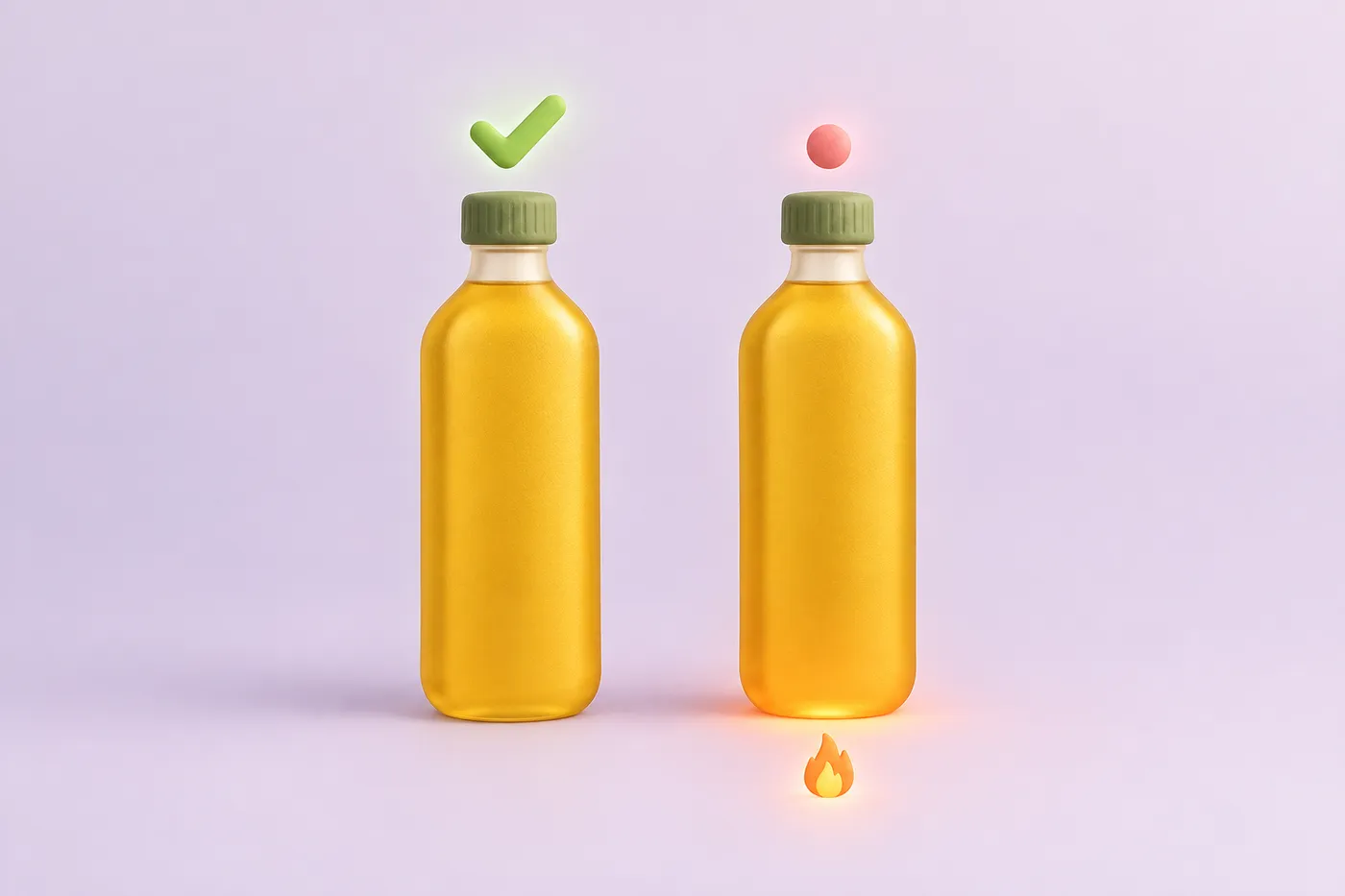
The heart disease debate on vegetable oil is already settled elsewhere and favors lower risk, not higher. The real open questions are whether hexane extraction leaves any residue (unmeasured) and what happens when the oil is overheated or reused, which does measurably generate harmful aldehydes, though mostly in cell and animal studies rather than confirmed human outcomes.
Key takeaways
- No published study measures how much hexane residue, if any, remains in retail vegetable oil
- Heating oil above its smoke point generates reactive aldehydes like acrolein and 4-hydroxynonenal
- Reheating oil up to 10 times at 150 to 190 degrees Celsius raised lipid peroxidation with every cycle
- Soybean oil's trans fat rose to 5.88 percent after heavy heating while coconut oil barely changed
- Human trial data linking these breakdown products to disease is still missing
Understand the ingredients on your next food label.
Use EatMatrix on your iPhone to scan an ingredient list and explore the ingredient information in the app. Start with a label you already have.
Get EatMatrix for iPhoneOn this page
The “is vegetable oil bad for you” question people usually mean is about heart disease, and that one is settled: the largest cohort and trial evidence on linoleic acid, the fatty acid that makes soybean, corn and sunflower oil what they are, favors lower cardiovascular risk over higher risk. This article doesn’t re-run that debate. It answers the two questions that debate leaves out: what happens to the oil before it reaches the bottle, and what happens to it the second time it hits a hot pan.
Vegetable oil covers several different oils grouped under one label. Soybean, canola, corn and sunflower oil are pressed and solvent extracted from seeds, which is chemically different from fruit oils like olive and palm oil that are pressed from flesh. That distinction matters for everything that follows, because the two real risk factors here, extraction chemistry and heat, play out differently depending on which oil and which kitchen habit you’re asking about.
The hexane extraction scare, and what the data can’t confirm
Most commercial vegetable oil starts as crushed seed, and the oil is pulled out using n-hexane, a petroleum-derived solvent chosen because it’s cheap to recover and very good at dissolving fat.[1] The solvent is meant to evaporate off during refining, which is also why the industry has spent the last decade looking for less hazardous “green” alternatives to replace it.
Here’s where the honest answer gets uncomfortable: a search of the published literature did not turn up a residue-level analysis measuring how much hexane, if any, remains in the retail oil on a shelf. That kind of testing exists, but it lives in regulatory and industry documentation rather than indexed biomedical research, so this search could not confirm or rule out a specific number.
One related fact turns up, from a different exposure route entirely. n-hexane’s occupational exposure limit in air was set at 500 parts per million in the 1940s and lowered to 100 ppm by 1976, after neurotoxicity was identified even near lower levels, but no study compares that occupational threshold against actual hexane residue levels in food oil.[2]
Those are decades of industrial lung exposure. A bottle of oil on a shelf is a completely different kind of exposure, whatever solvent residue it does or doesn’t carry. No study in this search compares the two directly, so the extraction chemistry is real, the occupational toxicity data is real, and the bridge between them for food-grade residue hasn’t been built by the research this pipeline can access.
What this section can’t tell you: no published analysis quantifies hexane residue in the vegetable oil on your shelf. That is a real gap in the evidence. It leaves the question open rather than answered.
Where the real risk shows up: the heat
The part of this story that does have solid data is what happens once the oil is hot.
Heating vegetable oil breaks down its polyunsaturated fatty acids into a family of reactive aldehydes, including acrolein and 4-hydroxynonenal, and the amount formed depends on the oil’s fat composition, the temperature and how long it’s heated.[3] It’s the same family of reactive aldehydes your liver has to clear when it breaks down the acetaldehyde from a drink, just generated in the pan instead of the bloodstream.
Two things make it worse, and both have been measured directly:
- Reheating compounds the damage. A study that fried French fries in palm olein, canola and sunflower oil recycled up to 10 times at 150°C and 190°C found lipid peroxidation rose with every single frying cycle, and rose faster at the higher temperature.[4]
- Not all oils fail at the same rate. In a separate heating trial, soybean oil’s trans fat content climbed from 0.76% to 5.88% after four hours at 230°C, while coconut oil, far lower in polyunsaturated fat, barely moved, ending at 0.38%.[5]
That second finding is the twist worth sitting with: the same polyunsaturated fat that makes canola oil and soybean oil look better on a cholesterol panel is exactly what makes them break down faster in a hot pan. Heart health and heat stability pull in opposite directions, and no single oil wins both.
5.88% trans fat in soybean oil after 4 hours at 230°C, up from 0.76% PMID 42996220
What the breakdown products do, and what’s still unproven in humans
The toxicology on these aldehydes is real, and it comes almost entirely from cells and animals. Direct human data is far thinner.
4-hydroxynonenal and related aldehydes are reactive enough to diffuse away from where they form and attach to proteins and DNA, and cell and animal research has linked that reactivity to DNA damage and cell death once concentrations get high enough.[6]
That’s a mechanism. It is a long way from a disease outcome. A 2020 review that compiled the animal and cellular toxicology on these compounds said so explicitly: despite extensive lab evidence of harm, there’s still an unmet need for nutritional and epidemiological trials connecting how much of this stuff people eat to whether they get sick from it.[7]
Bottom line on the biology: the mechanism by which overheated oil could harm you is well described in cells and animals. Whether it does, at the amounts a real diet exposes you to, hasn’t been tested in people.
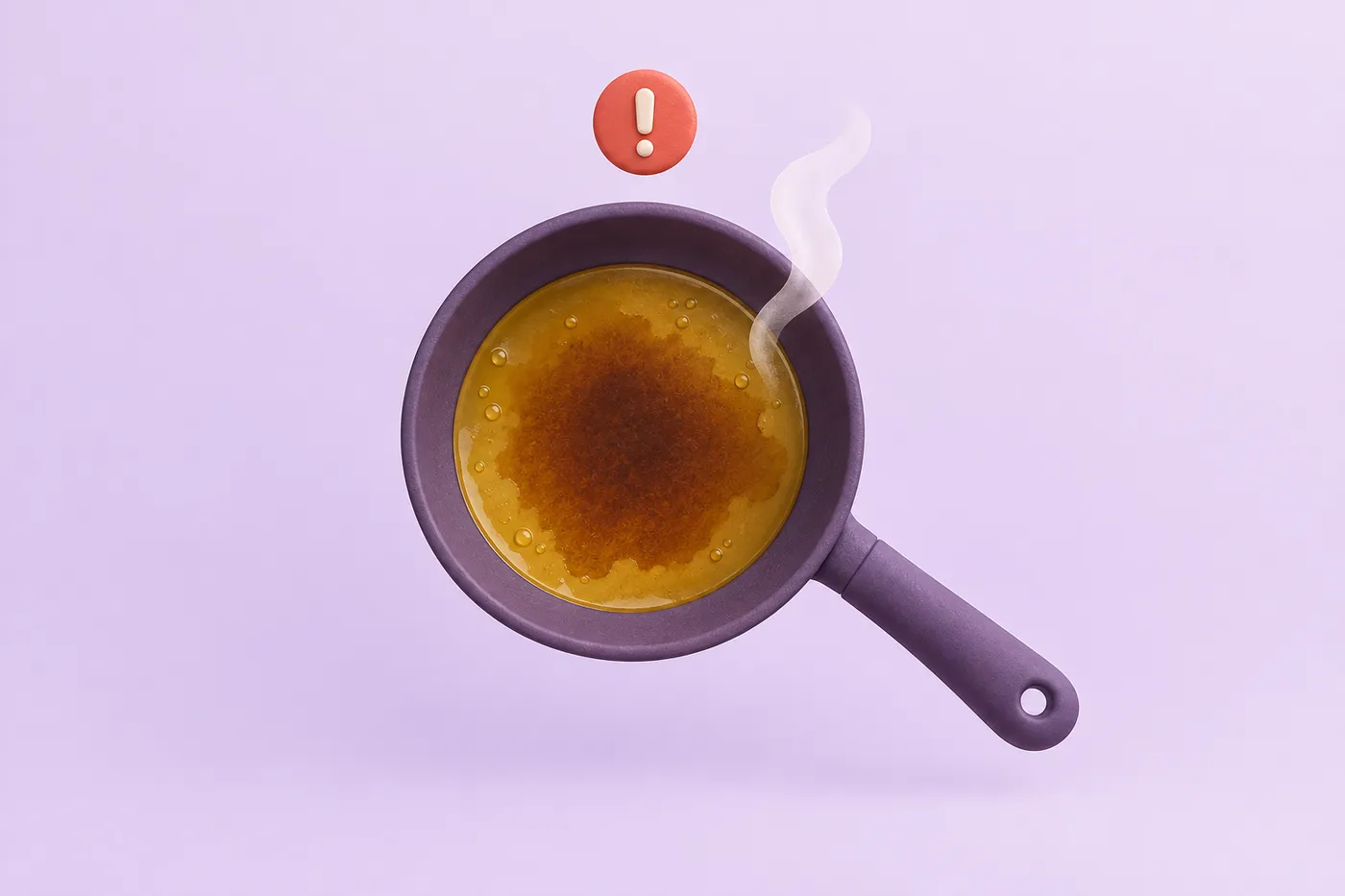
In the kitchen, you don’t need a lab to notice when oil has broken down. It darkens, starts smoking well before its usual frying temperature, or picks up a rancid smell, all signs the fat has oxidized past the point of reuse.
Where vegetable oil loses, and where it doesn’t
Put the extraction question aside and the heat-stability question is genuinely answerable: some oils hold up better under repeated high heat than others, and it isn’t the ones the heart disease evidence favors.
In a deep frying comparison, a standard vegetable oil blend reached the legal spoilage limit for total polar compounds in just 15 hours of frying, despite containing more vitamin E than the olive oil it was tested against. Every category of olive oil lasted 24 to 27 hours under the same conditions before hitting that same limit.[8]
How different oils held up under sustained heat
| Oil | Test condition | What happened |
|---|---|---|
| Standard vegetable oil blend | Deep frying to spoilage | Reached the legal polar-compound limit at 15 hours |
| Olive oil (all grades tested) | Same deep frying protocol | Lasted 24 to 27 hours before the same limit |
| Soybean oil | 230°C, continuous, 4 hours | Trans fat rose from 0.76% to 5.88% |
| Coconut oil | Same 230°C protocol | Trans fat stayed near 0.38% |
Each row is from a different study, so conditions vary across rows.
That doesn’t make vegetable oil dangerous for ordinary cooking. Most home cooking happens at lower, shorter exposures than a commercial fryer running the same oil for a full shift, and nobody is measuring total polar compounds on a Tuesday night stir fry. For that kind of cooking, the fatty acid profile that affects long-term heart disease risk is still the more relevant factor than oxidation. For anything approaching sustained deep frying or oil reuse, though, a more oleic sunflower oil or a saturated-leaning oil will outlast a standard vegetable oil blend, and the data above is why.
What would change this verdict
The missing piece is specific: a direct human trial that measures how much of these aldehydes people absorb from reused cooking oil, and tracks whether that intake predicts a real cardiovascular or metabolic outcome. Until that trial exists, the mechanism stays established while the human consequence stays open, and that’s a genuinely different claim from either “it’s fine” or “it’s dangerous.”
This article summarises publicly available regulatory assessments and peer-reviewed research about food ingredients. It is general information and is not intended to diagnose, treat, cure, or prevent any disease, and it is not personalised dietary or medical advice. Regulatory positions change; the EatMatrix app reflects the current assessments in our database. If you have an allergy, a medical condition, or are pregnant, talk to a qualified clinician or dietitian before changing what you eat.
References
- Green solvents and technologies for oil extraction from oilseeds.. Chemistry Central journal, 2017.
- Limitations of occupational air contaminant standards, as exemplified by the neurotoxin N-hexane.. Journal of public health policy, 1999.
- Toxic aldehydes in cooking vegetable oils: Generation, toxicity and disposal methods.. Food chemistry: X, 2025.
- Reheating Oils During Deep Frying Alters Fatty Acid Profiles, Lipid Peroxidation Level, and Nutritional Indices of French Fries.. Journal of food science, 2025.
- Effect of continuous high thermal processing on physico-chemical and nutritional alterations in cold-pressed and refined edible oils.. Frontiers in nutrition, 2026.
- Genotoxicity of lipid oxidation compounds.. Free radical biology & medicine, 2017.
- Potential Adverse Public Health Effects Afforded by the Ingestion of Dietary Lipid Oxidation Product Toxins: Significance of Fried Food Sources.. Nutrients, 2020.
- Olive oil stability under deep-frying conditions.. Food and chemical toxicology : an international journal published for the British Industrial Biological Research Association, 2010.
Frequently asked questions
Is vegetable oil bad for you?⌄
The cohort and trial evidence on its fatty acids favors lower heart disease risk, not higher. The real risk shows up with heat: overheating or reusing the oil generates reactive aldehydes that are well studied in cells and animals but not yet confirmed to cause disease in people.
Does vegetable oil contain hexane residue?⌄
Most commercial vegetable oil is extracted using n-hexane, which is meant to evaporate during refining. No published residue-level analysis of retail oil was found, so this specific question remains unanswered rather than confirmed safe or unsafe.
Is reheating vegetable oil dangerous?⌄
A study that recycled frying oil up to 10 times at 150 and 190 degrees Celsius found lipid peroxidation increased with every cycle, worse at the higher temperature. Direct human outcome data from this exposure is still limited.
What oil holds up best for frying and reuse?⌄
Oils higher in saturated or monounsaturated fat, like olive oil, resist oxidation longer than a standard vegetable oil blend. In one comparison, olive oil lasted 24 to 27 hours of deep frying before reaching the legal spoilage limit, versus 15 hours for a vegetable oil blend.
Is vegetable oil safe for everyday home cooking?⌄
Most home cooking uses lower temperatures and shorter exposure than the industrial reuse studies that found the largest increases in harmful compounds, so fatty acid profile remains the more relevant factor for typical use.
More like this, by email
A weekly email with our new research-backed guides. No spam, unsubscribe any time.