E322 Lecithin's Real Risk Is the Choline Load, Not the Additive
· 7 min read
Written and fact checked by EatMatrix Research Team
Food-additive research team at MAXHUMAN, MB, makers of the EatMatrix scanner
Every claim links to a primary source. Regulatory positions cite EFSA, FDA and WHO/JECFA opinions current at publication.
TL;DR
Lecithin (E322) has EFSA clearance with no numerical intake limit, so the additive itself is not the safety concern. The real controversy is about TMAO, a gut bacteria byproduct of dietary choline, and the best available human trial found the choline form in lecithin does not raise TMAO the way free choline supplements do. The one specific downside is that soy lecithin must be labeled as an allergen, though no dedicated study confirms how well soy-allergic people tolerate it.
Key takeaways
- EFSA's 2017 review found no safety concern and set no numerical intake limit for lecithin
- TMAO forms when gut bacteria metabolize dietary choline, not specifically from the food additive
- A human trial found phosphatidylcholine, the form in lecithin, raised TMAO far less than free choline
- No verified trial links the actual food-additive dose of lecithin to cholesterol or heart risk
- Soy lecithin must be labeled as an allergen, and sunflower lecithin is the non-soy alternative
Understand the ingredients on your next food label.
Use EatMatrix on your iPhone to scan an ingredient list and explore the ingredient information in the app. Start with a label you already have.
Get EatMatrix for iPhoneOn this page
- What EFSA concluded about lecithin (E322) in 2017
- The pathway that put lecithin in the TMAO story
- The one human cohort behind the TMAO scare, and what it doesn’t cover
- The dose gap nobody selling this story mentions
- The soy allergy question
- Why the causal debate over TMAO isn’t settled
- The bottom line
- References
Lecithin (E322) is cleared by EFSA with no numerical intake limit, and the additive itself is not where the interesting science lives. The real story is about choline, the nutrient lecithin is mostly made of, and a gut bacteria pathway that turns it into a compound cardiologists have spent over a decade arguing about. The amount of lecithin in your candy bar has almost nothing to do with that argument.
That is the actual shape of the evidence. Shoppers who stop at “lecithin is fine” or “lecithin is linked to heart disease” are both missing the more useful answer in between.
What EFSA concluded about lecithin (E322) in 2017
Start with the regulatory baseline, because it is the least controversial part of this story.
EFSA’s 2017 re-evaluation of lecithins concluded there was no safety concern at the reported uses and use levels for the general population above 1 year of age.[1] The panel went further than most re-evaluations: it did not consider it necessary to set a numerical acceptable daily intake at all, a designation reserved for additives with a wide enough margin of safety that a numeric cap adds nothing.[1] EFSA’s reviewers cleared it even for infants from 12 weeks of age, a population regulators are typically far more cautious with.
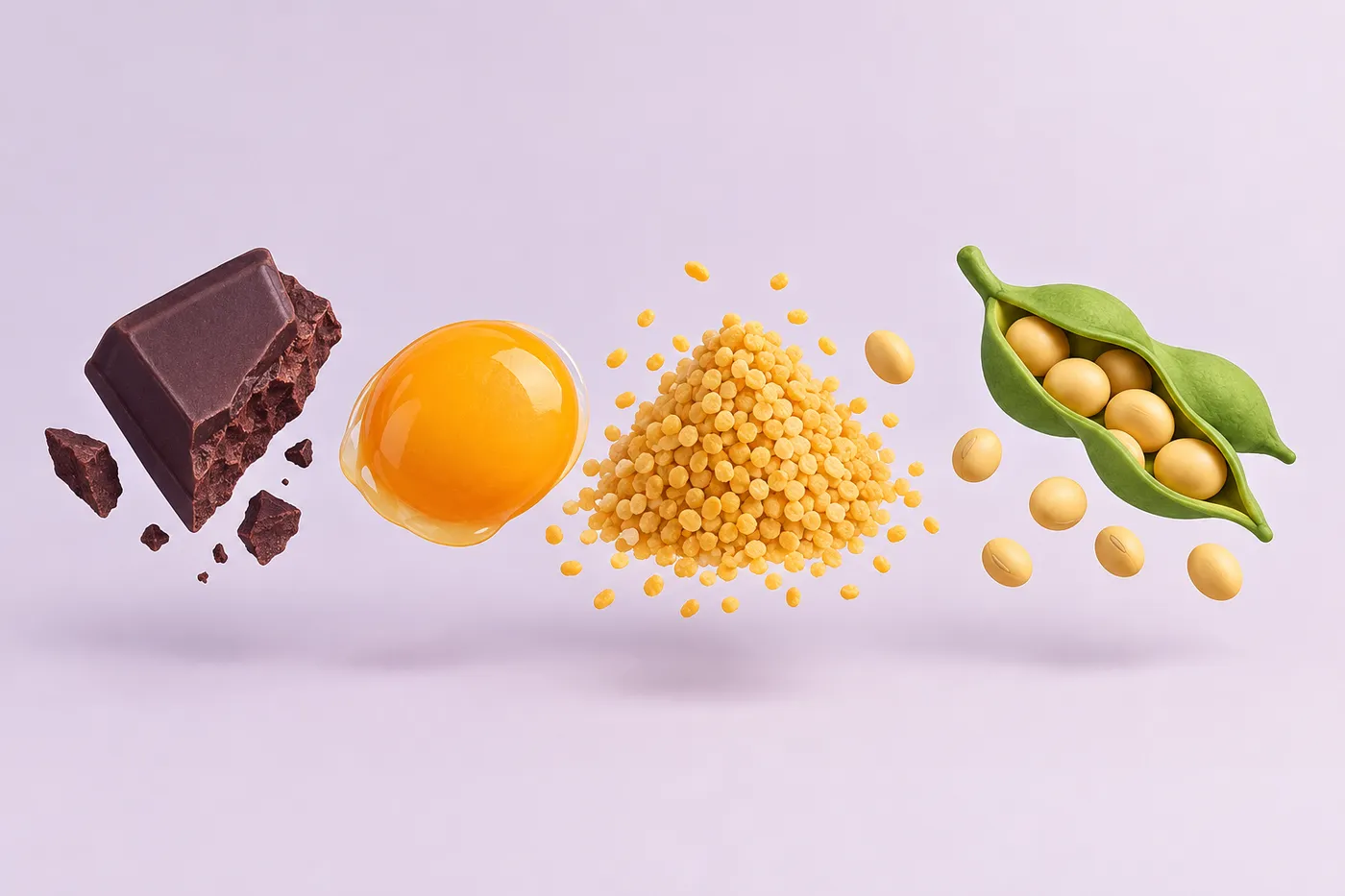
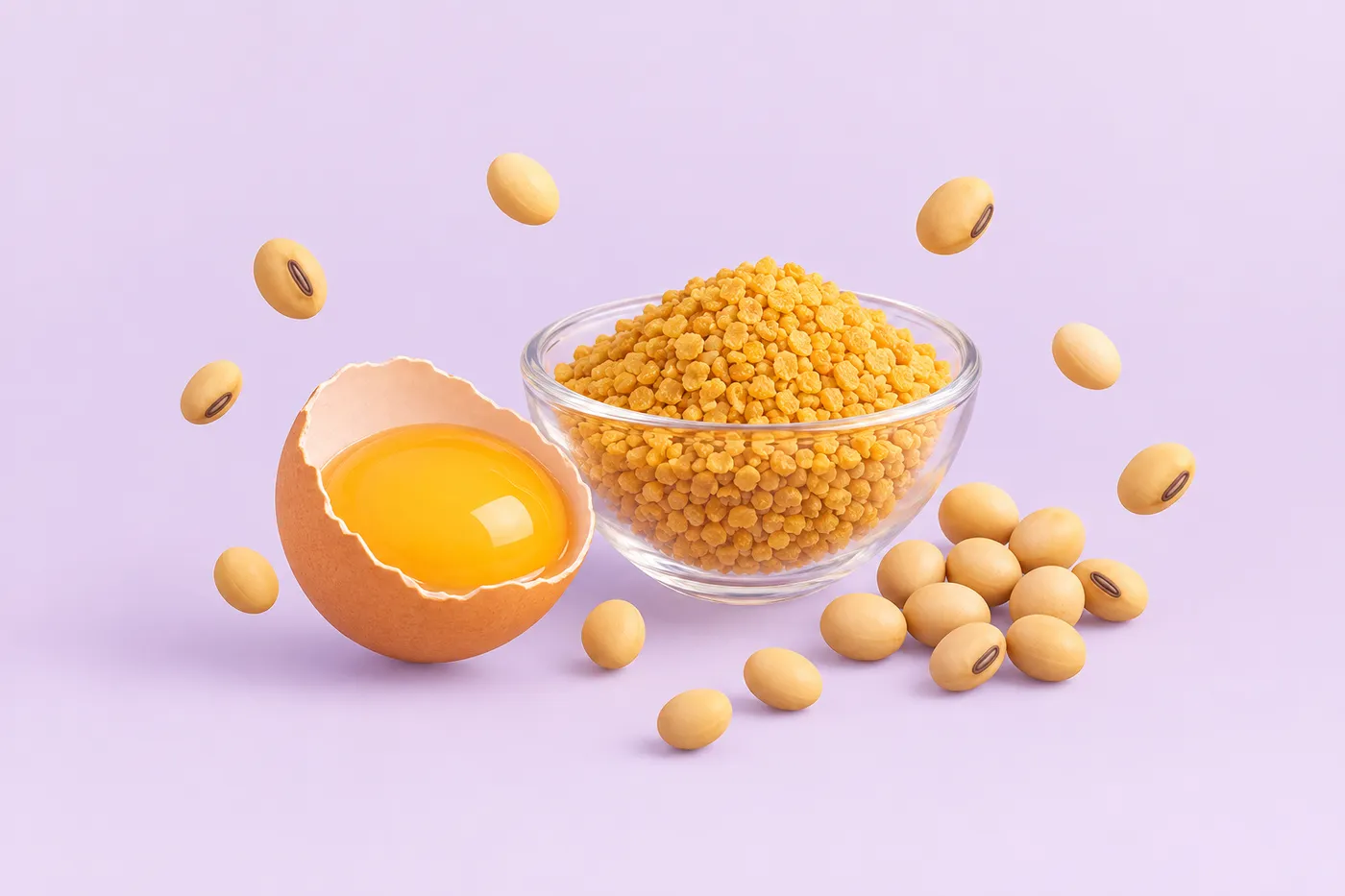
Lecithin is most commonly extracted from soybeans, though other natural sources such as egg yolk are also used to produce phospholipid-rich lecithin for food and pharmaceutical use.[2] Producers purify it from the raw material using solvent extraction and chromatography rather than chemical synthesis, which is why it behaves in food the same way the phospholipids in your own cell membranes behave.[2]
The pathway that put lecithin in the TMAO story
Lecithin is mostly phosphatidylcholine, a phospholipid built around choline.[3] That single fact is why lecithin gets dragged into cardiovascular research that has nothing to do with food additives.
Gut bacteria can process dietary choline, including the phosphatidylcholine form found in lecithin, through the same trimethylamine pathway.[3] Once trimethylamine reaches the liver, the enzyme flavin-containing monooxygenase-3 oxidizes it into trimethylamine-N-oxide, or TMAO, the molecule that shows up in every headline about eggs, meat and heart disease.[4]
The foundational evidence for this pathway comes from mice. Researchers found that dietary supplementation with choline, TMAO or betaine promoted atherosclerosis in mice, and that germ-free mice, lacking the gut bacteria needed to produce TMAO, were protected from the effect.[5] That mechanism is real and well replicated in mice. It does not, by itself, tell you what a food additive does inside a human body.
The mechanism is real, the leap to your food is where people get it wrong. A pathway that exists in mice fed choline does not automatically tell you what a fraction of a gram of lecithin in your chocolate bar does to you.
The one human cohort behind the TMAO scare, and what it doesn’t cover
The human evidence is thinner and more specific than the mouse work, and it is worth being precise about what it measured.
A prospective cohort of 4,007 patients undergoing coronary angiography found that higher fasting plasma TMAO levels, produced through gut-microbial metabolism of dietary phosphatidylcholine, were associated with an increased risk of death, heart attack or stroke over three years of follow-up.[6] The same study showed that swallowing a phosphatidylcholine challenge (two hard-boiled eggs plus a labeled tracer dose) reliably spiked plasma TMAO in the hours afterward.[6]
4,007 patients in the cohort linking plasma TMAO to cardiovascular risk PMID 23614584
That is an observational association between a blood marker and an outcome. It is not a controlled trial of lecithin intake, so it cannot, by itself, establish that dietary lecithin causes heart disease, because the patients were not randomized to eat more or less phosphatidylcholine. The cohort tells you TMAO tracks with risk. It does not tell you that adding lecithin to your diet raises that risk, or that removing it would lower it.
In fact, the one randomized controlled trial that comes close to testing that question found something more limited. Adults with metabolic syndrome given a soy-lecithin-enriched beverage for two weeks showed no worse endotoxemia, gut-barrier markers or cardiometabolic risk markers than a comparison group given a different phospholipid source.[7] That is a short-term biomarker trial. It measured neither heart attacks nor strokes, which is exactly the point: the event-level evidence on lecithin and cardiovascular outcomes in humans stays observational, because nobody has run the harder trial.
The dose gap nobody selling this story mentions
Here is where the additive itself, as opposed to the nutrient inside it, matters.
We could not verify a published clinical trial that tested soy lecithin supplementation specifically against blood cholesterol at a defined gram-scale dose. If that research exists, it did not surface in a citation search built around this exact question, so it is left out rather than guessed at.
What is verifiable is simpler: the lecithin used to keep chocolate or margarine from separating is added at a fraction of a percent of the product’s weight, an amount set by what the emulsion needs rather than by any safety ceiling. The cardiovascular research discussed above used a full phosphatidylcholine challenge, two eggs’ worth in a single dose, or a supplemented beverage measured in grams. Nobody has shown that the milligram-scale amount doing emulsifying work in a cookie behaves the same way.
It is the same principle behind why an orange and a vitamin C tablet are not interchangeable in nutrition research: the nutrient can be chemically identical while the dose, the matrix and the delivery route change what your body does with it. For a deeper look at which additives do have real trial evidence behind the concern and which don’t, see food additives to avoid: the two with real trial evidence.
The soy allergy question
This is the one place a real, sourced downside might exist, and it is also the place the evidence runs out fastest.
Soy is one of the major allergen groups that most countries, including EU member states, require to be declared on food labels.[8] That labeling requirement is what protects a soy-allergic shopper, not an assumption about how refined the lecithin is.
We looked for research measuring whether refining strips enough soy protein out of commercial lecithin to make it safe for soy-allergic people, and for trials testing soy-allergic patients against refined lecithin directly. Neither turned up a citation that would support a specific safety claim. Here is what that leaves established, and what it leaves open:
- What’s established: soy lecithin is legally required to be labeled, so avoidance is straightforward for anyone who wants it.
- What isn’t established here: a specific, cited figure for residual protein in refined lecithin, or a clinical study confirming most soy-allergic people tolerate it.
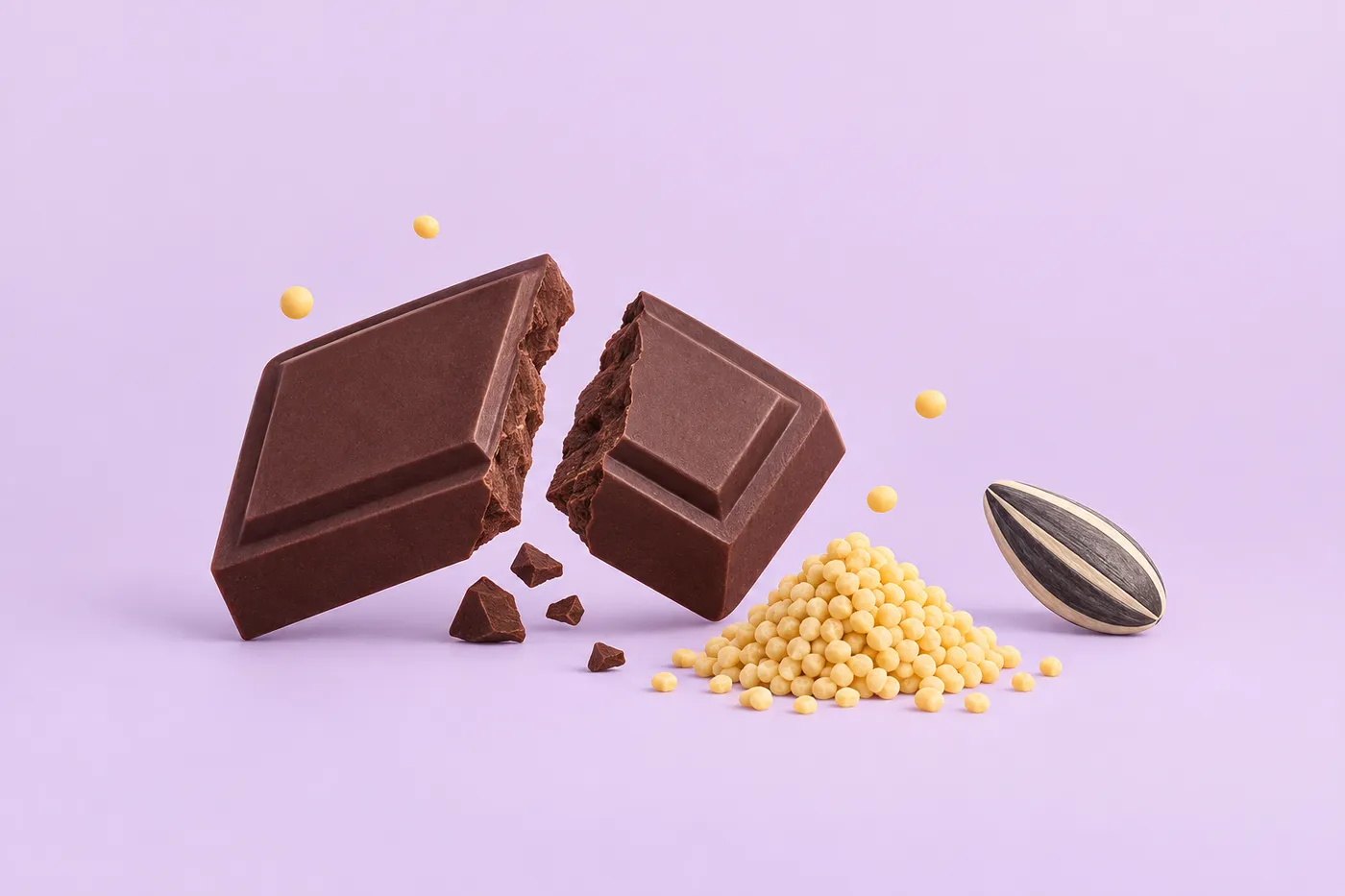
- The practical workaround: sunflower lecithin performs the same emulsifying job as soy lecithin and is increasingly used as a non-soy, non-GMO alternative, which sidesteps the question entirely for anyone who would rather not test it.
If you have a diagnosed soy allergy, don’t rely on refining as your safety margin. Check the label, and reach for a product using sunflower lecithin if soy-free matters to you.
Why the causal debate over TMAO isn’t settled
Even within the research community that built this pathway, the causal question stays open.
Researchers reviewing the field describe TMAO’s role in cardiovascular disease as still questioned: is it a mediator that drives disease, or a bystander marker of some other underlying dietary and metabolic pattern?[9] That is not a fringe objection. It is the standard caveat in the field’s own literature.
Part of the reason the picture stays muddled is that people do not produce TMAO uniformly from the same food. A randomized crossover trial giving 37 healthy men an identical 600 mg choline dose, either as choline bitartrate or as phosphatidylcholine, found gut microbiota composition differed sharply between high-TMAO producers and low-TMAO producers, with high producers carrying more Clostridium lineages from two specific bacterial families.[3] The same trial found something that undercuts the simple “lecithin raises TMAO” framing directly: phosphatidylcholine, the form found in lecithin, produced no significant TMAO rise compared with a no-choline control, while free choline (choline bitartrate) produced roughly three times the TMAO spike.[3]
3x greater TMAO spike from free choline than from phosphatidylcholine, the form in lecithin, at an identical dose PMID 32722424
That single trial is the most useful fact in this entire article, because it is the one place the mechanism and the additive meet, and they don’t line up the way the scare version of this story assumes.
The bottom line
Lecithin (E322) clears every regulatory bar EFSA has set for it, with no numerical intake limit and no flagged safety concern at any age group reviewed.[1] The additive is not the source of the TMAO conversation that keeps attaching itself to lecithin online.
That conversation is really about dietary choline broadly, tested with egg-sized doses in a cardiac cohort and gram-scale supplements in short trials, not with the fraction of a percent used to stabilize a chocolate bar. Where a real, if narrower, TMAO-lecithin connection could exist, the best available trial found phosphatidylcholine behaves differently from the free choline that drives the effect.
If you are avoiding lecithin because of the heart-disease headlines, you are avoiding the wrong ingredient for the wrong reason. If you are avoiding it because of soy allergy, check the label and reach for a sunflower-lecithin product, because that is the one piece of this story with a straightforward, verifiable fix. Scanning the label for the source rather than the E-number is where an app like EatMatrix earns its keep.
This article summarises publicly available regulatory assessments and peer-reviewed research about food ingredients. It is general information and is not intended to diagnose, treat, cure, or prevent any disease, and it is not personalised dietary or medical advice. Regulatory positions change; the EatMatrix app reflects the current assessments in our database. If you have an allergy, a medical condition, or are pregnant, talk to a qualified clinician or dietitian before changing what you eat.
References
- Re-evaluation of lecithins (E 322) as a food additive.. EFSA journal. European Food Safety Authority, 2017.
- The use of natural and synthetic phospholipids as pharmaceutical excipients.. European journal of lipid science and technology : EJLST, 2014.
- Effect of Choline Forms and Gut Microbiota Composition on Trimethylamine-<i>N</i>-Oxide Response in Healthy Men.. Nutrients, 2020.
- Trimethylamine N-oxide: breathe new life.. British journal of pharmacology, 2018.
- Gut flora metabolism of phosphatidylcholine promotes cardiovascular disease.. Nature, 2011.
- Intestinal microbial metabolism of phosphatidylcholine and cardiovascular risk.. The New England journal of medicine, 2013.
- Milk-Fat-Globule-Membrane-Enriched Dairy Milk Compared with a Soy-Lecithin-Enriched Beverage Did Not Adversely Affect Endotoxemia or Biomarkers of Gut Barrier Function and Cardiometabolic Risk in Adults with Metabolic Syndrome: A Randomized Controlled Crossover Trial.. Nutrients, 2023.
- Food Allergy Labeling Laws: International Guidelines for Residents and Travelers.. Clinical reviews in allergy & immunology, 2023.
- Implication of Trimethylamine N-Oxide (TMAO) in Disease: Potential Biomarker or New Therapeutic Target.. Nutrients, 2018.
Frequently asked questions
Is lecithin (E322) safe?⌄
Yes. EFSA's 2017 re-evaluation found no safety concern at the reported uses and use levels for the general population above 1 year of age, and the panel did not consider a numerical intake limit necessary.
Does lecithin cause heart disease?⌄
No study shows that. The TMAO research linking gut bacteria byproducts of choline to cardiovascular risk is observational, and a human trial found the phosphatidylcholine form found in lecithin raised TMAO far less than a free choline supplement did at the same dose.
Is lecithin (E322) vegan?⌄
It depends on the source. Lecithin is most commonly extracted from soybeans, which is vegan, but it can also be produced from egg yolk, which is not.
Is soy lecithin safe if I have a soy allergy?⌄
Soy lecithin is legally required to carry an allergen label, so checking the label is the reliable safeguard. No specific study in this review confirmed how well soy-allergic people tolerate refined lecithin, so sunflower lecithin is the practical non-soy alternative.
What is lecithin (E322) made from?⌄
Most food-grade lecithin is extracted from soybeans, though other natural sources such as egg yolk are also used to produce it.
More like this, by email
A weekly email with our new research-backed guides. No spam, unsubscribe any time.