Is Soy Lecithin Bad for You? The Real Risk Isn't Estrogen
· 6 min read
Written and fact checked by EatMatrix Research Team
Food-additive research team at MAXHUMAN, MB, makers of the EatMatrix scanner
Every claim links to a primary source. Regulatory positions cite EFSA, FDA and WHO/JECFA opinions current at publication.
TL;DR
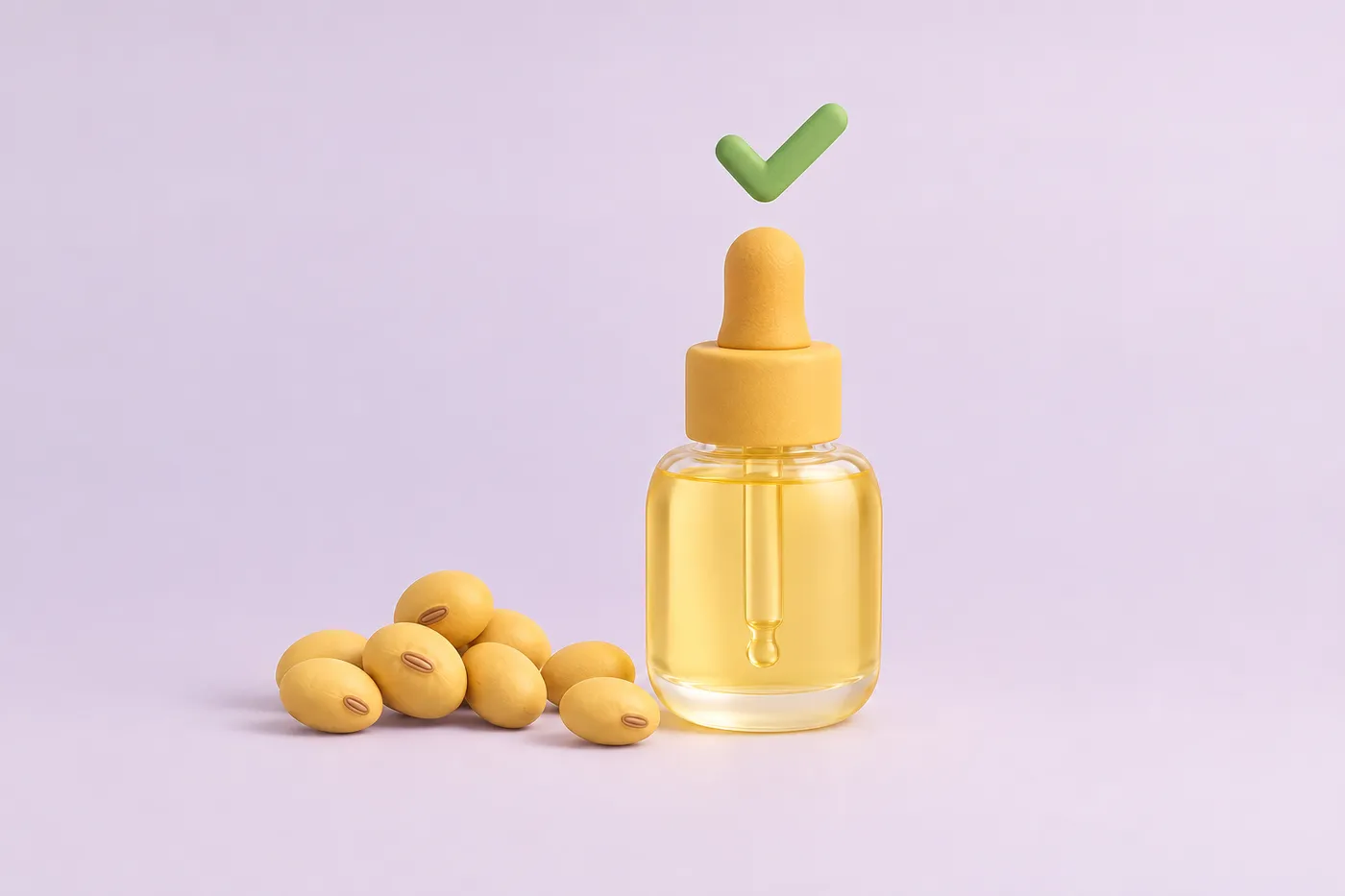
Soy lecithin (E322) is a phospholipid byproduct separated from crude soybean oil during refining, not a synthetic chemical, and EFSA found no safety concern in its 2017 re-evaluation. The estrogen fear doesn't hold up, since isoflavones are a different kind of compound than the phospholipids that become lecithin. The one evidence-backed nuance is that phosphatidylcholine, lecithin's main component, raises TMAO through gut bacteria, a signal linked to cardiovascular risk in observational data, though no trial has tested lecithin at food-emulsifier doses specifically.
Key takeaways
- Soy lecithin is separated from soybean oil during refining, never synthesized
- EFSA's 2017 re-evaluation found no safety concern at reported use levels
- Isoflavones and the phospholipids in lecithin are different compounds
- US law requires an allergen label because trace soy protein can remain
- Phosphatidylcholine raises TMAO via gut bacteria, linked to cardiovascular risk in a cohort
Understand the ingredients on your next food label.
Use EatMatrix on your iPhone to scan an ingredient list and explore the ingredient information in the app. Start with a label you already have.
Get EatMatrix for iPhoneOn this page
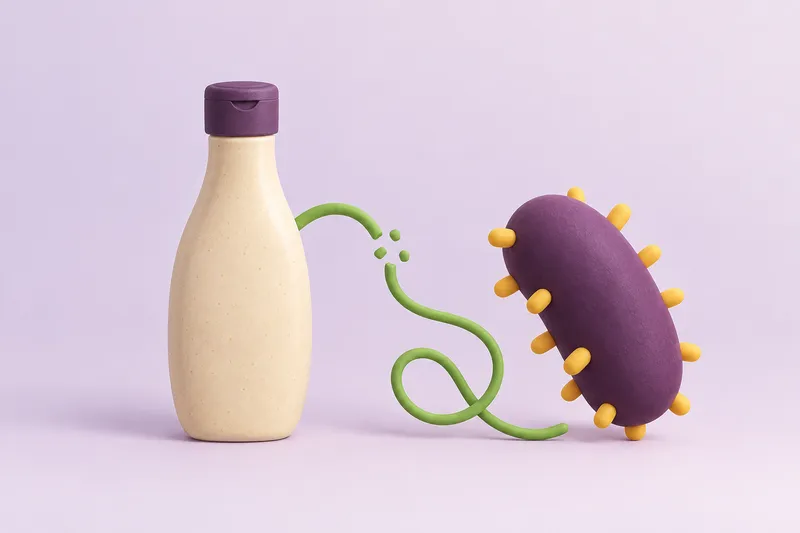
Soy lecithin is not an industrial chemical smuggled into your chocolate bar, and it is not quietly dosing you with soy estrogen. E322 is what is left over when a refinery strips the fat-soluble part out of crude soybean oil.[1] EFSA looked at it in 2017 and found no safety concern at the levels used in the food supply.[2] The one question worth taking seriously is not estrogen. It is what your gut bacteria do with the choline in it, and that story is more interesting, and more limited, than either side of the online argument admits.
What soy lecithin is
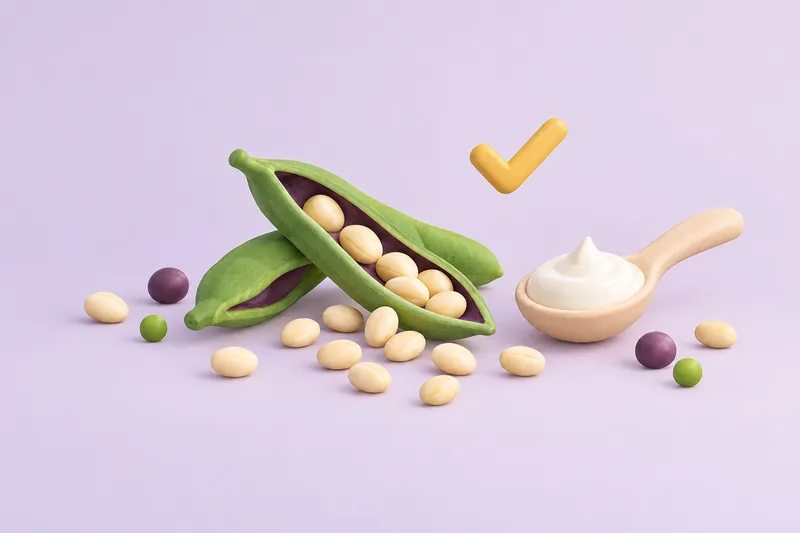
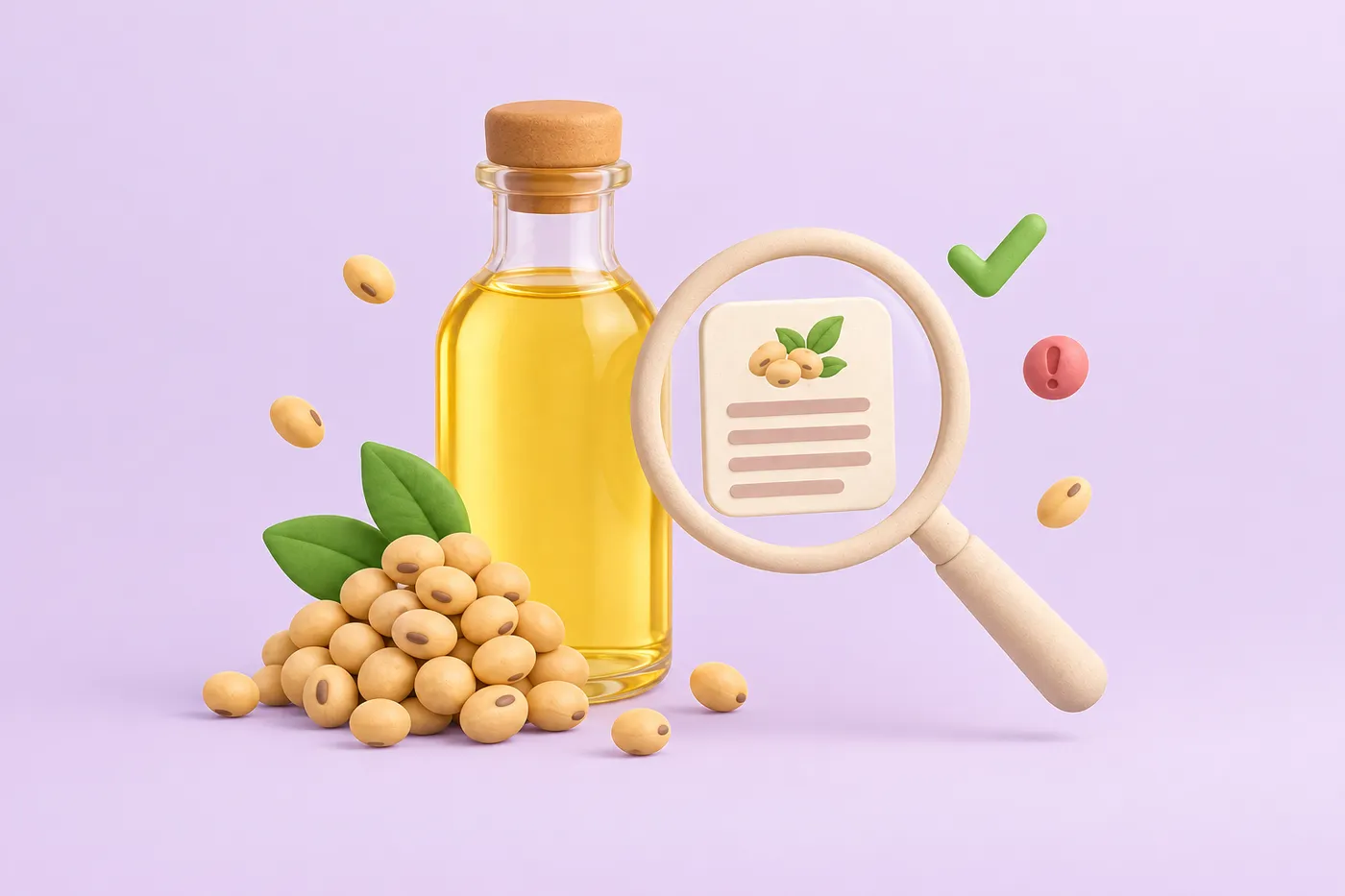
Crude soybean oil, straight out of the press, is a mess: fat mixed with gums, waxes, and phospholipids that make it cloudy and unstable. Refiners remove that gummy fraction in a step called degumming, and the fraction they pull out is lecithin.[1]
- Lecithin is separated, never synthesized. Nobody builds E322 in a reactor from scratch; it is isolated out of an existing food.
- It is mostly phospholipid. That is the molecule class responsible for lecithin’s usefulness as an emulsifier, the same reason egg yolk thickens mayonnaise.
- It carries the EFSA food-additive stamp. The 2017 re-evaluation of lecithins (E 322) assessed the compositional and toxicological data and did not flag a safety concern at the use levels reported across the food supply.[2]
Bottom line: soy lecithin is a cooking-oil byproduct that Europe’s food-safety regulator has already reviewed and cleared this decade.
The estrogen fear doesn’t survive the chemistry
The “soy equals estrogen” worry is really about isoflavones, the plant compounds in soy that can weakly interact with estrogen receptors. That fear gets borrowed wholesale and pinned on lecithin, which is a strange target for it.
Isoflavones and phospholipids are different kinds of molecules, and degumming is a separation built around exactly that kind of difference.[1] I could not find a study that directly measured how much isoflavone, if any, survives into retail-grade soy lecithin, so I am not going to hand you a number I do not have. What I can tell you is that the entire manufacturing step that creates lecithin exists to isolate phospholipids, not the plant pigments and polyphenols that isoflavones belong to.
That is a meaningfully different claim from “lecithin has no isoflavones.” It is “the process that makes lecithin was not built to concentrate them, and nobody has published the number that would settle it either way.” If the estrogen story is the reason you have been avoiding soy lecithin, it is resting on a leap nobody has measured.
What the allergy label is telling you
Soy allergy is the one legitimate safety question that attaches to soy lecithin, and it has a cleaner answer.
- US law requires the label. The Food Allergen Labeling and Consumer Protection Act requires soy lecithin to carry an allergen declaration because, as a soybean derivative, it can retain IgE-binding proteins, the kind that trigger allergic reactions.[3]
- That requirement exists regardless of quantity. The law does not wait for a specific threshold; if it comes from soy, it gets labeled.
- Tolerance has not been formally tested. I did not find an oral challenge study that measured how soy-allergic patients respond to commercial lecithin preparations. If you have a diagnosed soy allergy, the label is the safeguard to rely on, not an assumption about how refined the product is.
The one real question: lecithin, gut bacteria, and TMAO
Here is the part of the soy lecithin story that is backed by human data, and it has nothing to do with estrogen.
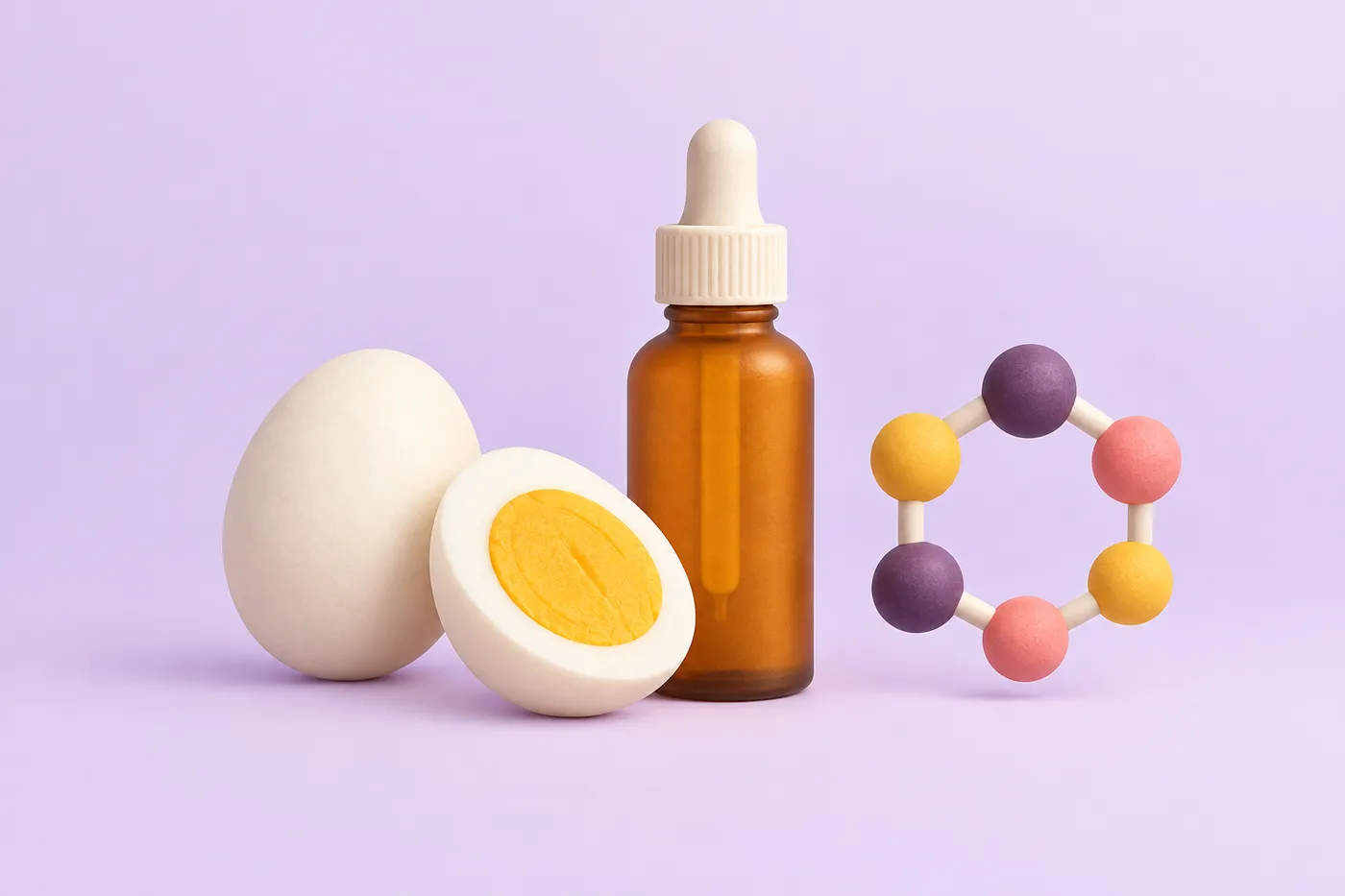
Phosphatidylcholine, the dominant phospholipid in lecithin, contains a choline group. In a landmark controlled feeding study, healthy volunteers given a phosphatidylcholine challenge (two hard-boiled eggs plus a labeled phosphatidylcholine dose) showed a clear, time-dependent rise in plasma trimethylamine-N-oxide, known as TMAO.[4]
The mechanism is not the compound itself. It is what gut bacteria do to it:
The antibiotic test: when the same researchers suppressed the volunteers’ intestinal microbiota with a course of oral antibiotics, the TMAO rise after the phosphatidylcholine challenge was markedly suppressed, and it came back once the antibiotics were stopped.[4]
That is the proof that TMAO production depends on which bacteria are living in your gut, not on phosphatidylcholine doing something on its own. The same research group then looked at real patients.
2.54 hazard ratio for a major cardiovascular event, highest vs. lowest TMAO quartile PMID 23614584
Among 4,007 patients undergoing elective coronary angiography, higher fasting plasma TMAO was linked to a more than twofold increase in the risk of death, heart attack, or stroke over three years of follow-up.[4] That is a real, published, human association, and it is the legitimate reason lecithin and choline show up in cardiology discussions at all.
What the TMAO research doesn’t prove
This is where both the scary version and the dismissive version of the soy lecithin story overreach.
- The challenge dose was built to produce a signal, unlike an everyday meal. The feeding study used two eggs plus a separately dosed, labeled phosphatidylcholine capsule, a defined research exposure. Nobody has published what the same test would show at the small amount of lecithin used to emulsify a chocolate bar or a tub of margarine.[4]
- Association isn’t causation. A broader umbrella review of the TMAO literature found consistent associations between circulating TMAO and cardiovascular, cerebral, and kidney disease, but concluded outright that a causal role for TMAO remains controversial, and that no trial has shown that lowering TMAO itself reduces risk.[5]
- Nobody has run the trial that would settle it for lecithin specifically. A controlled trial testing whether long-term dietary soy lecithin, at the doses used as a food emulsifier, changes cardiovascular event rates in humans does not exist in the published record I could find. That is the honest state of the evidence, not a reason to assume either safety or danger.
For a longer walk through the choline mechanism and how a phosphatidylcholine-based TMAO signal compares with other choline sources, the deeper breakdown is in E322 Lecithin’s Real Risk Is the Choline Load, Not the Additive.
Where this leaves a label reader
None of this adds up to a chemical to fear, and it does not add up to “perfectly fine either way” either. It adds up to something more specific.
Soy lecithin earns its EFSA clearance because of what it is: a phospholipid separated out of an oil you were already going to eat, used in food at emulsifier levels rather than as a standalone ingredient.[2] The TMAO research is real, human, and worth knowing, but it describes a mechanism and an association built on a concentrated research challenge dose, not a verdict on the trace amount doing emulsifying work in your bread.
If you are weighing packaged food against a standalone lecithin supplement taken by the spoonful, you are weighing two different exposures, and the research above was never about the smaller one. The additive in your ingredient panel is the least interesting part of this story. The gut bacteria metabolizing the choline in it are where the real science lives, and that science has not reached a verdict on soy lecithin itself yet. Food additives to avoid: the two with real trial evidence is a useful read if estrogen was not your biggest concern on the ingredient list.
This article summarises publicly available regulatory assessments and peer-reviewed research about food ingredients. It is general information and is not intended to diagnose, treat, cure, or prevent any disease, and it is not personalised dietary or medical advice. Regulatory positions change; the EatMatrix app reflects the current assessments in our database. If you have an allergy, a medical condition, or are pregnant, talk to a qualified clinician or dietitian before changing what you eat.
References
- Ultrasound Assisted Synthesis of Hydroxylated Soybean Lecithin from Crude Soybean Lecithin as an Emulsifier.. Journal of oleo science, 2017.
- Re-evaluation of lecithins (E 322) as a food additive.. EFSA journal. European Food Safety Authority, 2017.
- Adverse reaction to benzathine benzylpenicillin due to soy allergy: a case report.. Journal of medical case reports, 2015.
- Intestinal microbial metabolism of phosphatidylcholine and cardiovascular risk.. The New England journal of medicine, 2013.
- Circulating trimethylamine N-oxide and cardiovascular, cerebral, and renal diseases including mortality: Umbrella review of published systematic reviews and meta-analyses.. Nutrition, metabolism, and cardiovascular diseases : NMCD, 2025.
Frequently asked questions
Is soy lecithin bad for you?⌄
No evidence in the available research shows soy lecithin is harmful at the amounts used in food. EFSA's 2017 re-evaluation found no safety concern at the reported use levels, and the one genuine nuance involves gut bacteria and TMAO, not toxicity.
Does soy lecithin cause estrogen effects?⌄
The estrogen worry is really about isoflavones, a different class of compound than the phospholipids that make up lecithin. No study was found that directly measured isoflavone levels in retail soy lecithin, so the specific number is not established either way.
Is soy lecithin safe if I have a soy allergy?⌄
US law (FALCPA) requires soy lecithin to carry an allergen declaration because it can retain trace IgE-binding proteins. No oral challenge study was found measuring how soy-allergic patients tolerate commercial lecithin, so the label is the safeguard to rely on.
Does soy lecithin raise TMAO and heart disease risk?⌄
A controlled feeding study found that phosphatidylcholine, lecithin's main component, raised plasma TMAO, and higher TMAO was linked to a more than twofold increase in cardiovascular events in a cohort of 4,007 patients. The challenge dose was a concentrated research exposure, not a measure of food-level lecithin, and no trial has shown that lowering TMAO itself reduces risk.
Is soy lecithin a synthetic chemical?⌄
No. It is a phospholipid-rich byproduct separated out during the degumming step of crude soybean oil refining, not something built in a reactor.
More like this, by email
A weekly email with our new research-backed guides. No spam, unsubscribe any time.